
Names of God in the Bible were never handed out at random. Each one shows up at a specific turning point — a promise made, a battle won, a birth announced — and captures something about His character that the single word “God” cannot carry on its own.
Read the names of God in the Bible in the order Scripture reveals them, and a pattern starts to appear. A name tends to surface exactly when someone needed what that name describes: provision in the wilderness, healing after bitter water, peace in the middle of fear.
This guide walks through 30 of the most significant names of God in the Bible, grouped by where they appear in Scripture rather than listed alphabetically, so the story behind each name stays attached to it instead of getting flattened into a glossary.
You can also explore our guide to Biblical names and their meanings to discover more meaningful names from Scripture.
Why the Names of God in the Bible Matter
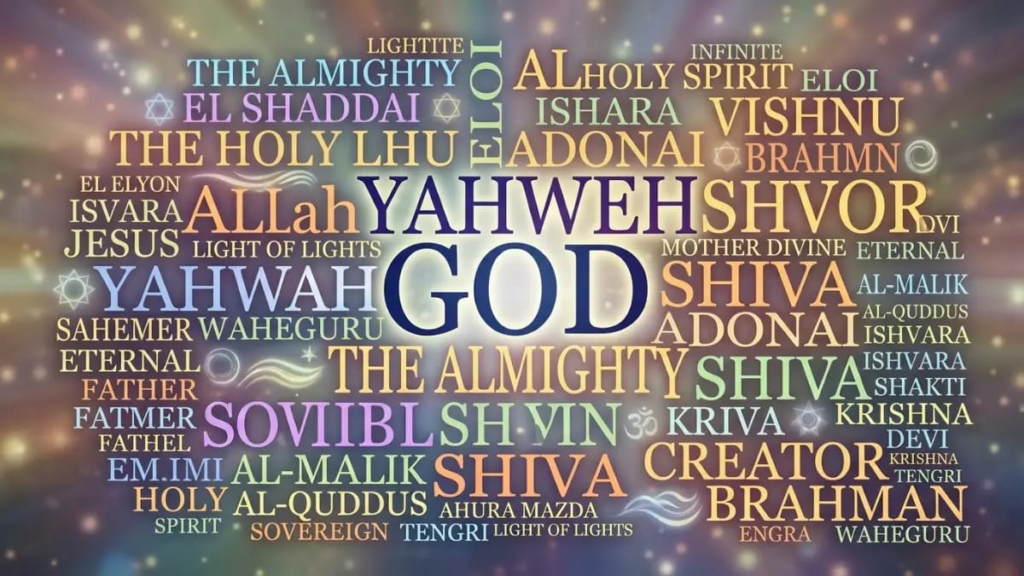
In the ancient Near East, names of God in the bible was never just a label. It described identity, authority, and often destiny. When God introduced Himself using a specific name, He was making a promise about how He intended to act.
That is why these names tend to appear at pressure points rather than in a tidy list — at a burning bush, on an altar built after a battle, beside a well in the wilderness, or simply the reassurance of being seen.
A number of these names were not chosen by God alone. Hagar, Abraham, and Gideon each named God after witnessing what He had just done for them. The names of God in the Bible, in other words, grew out of lived encounters rather than abstract theology.
Names Revealed to the Patriarchs
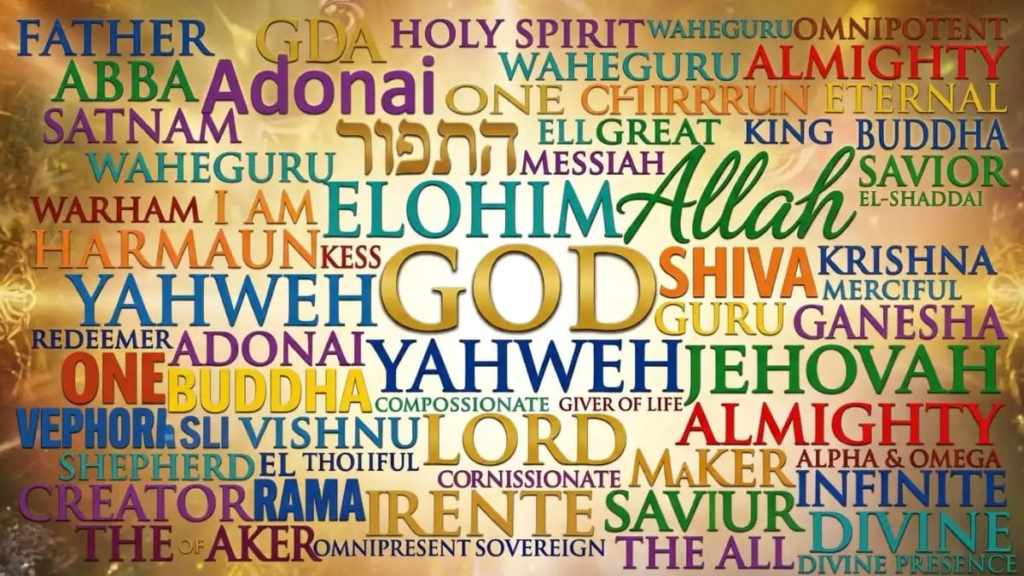
The earliest names of God in the Bible appear across Genesis, mostly to Abraham, Hagar, and their household, as God met each of them in a moment of crisis or covenant.
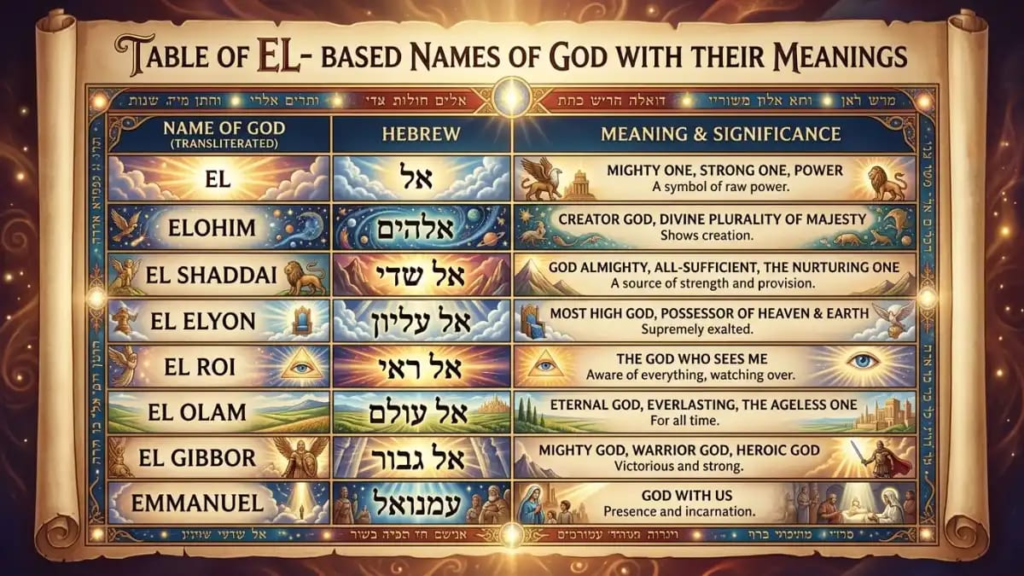
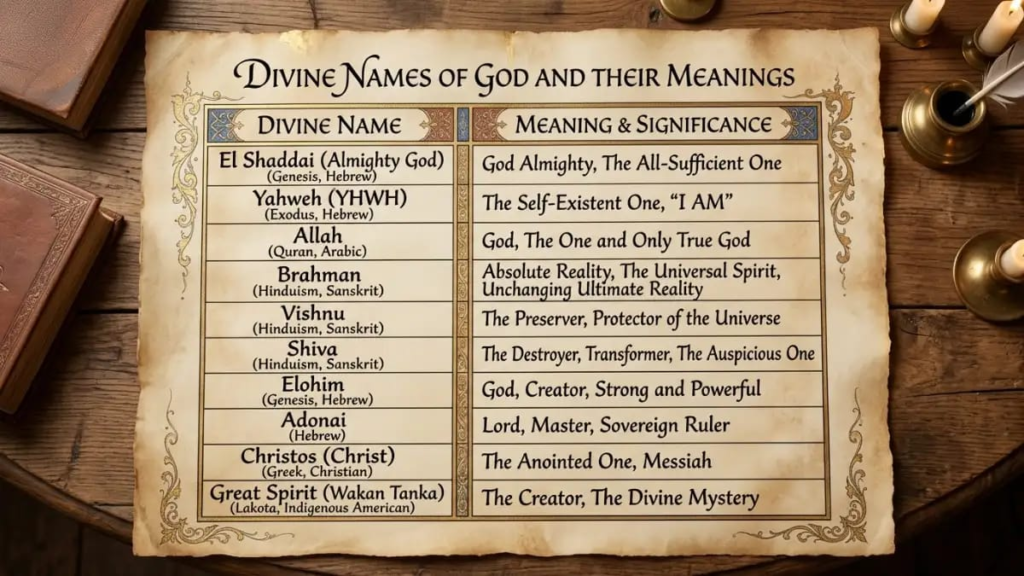
- Elohim — God, the Mighty Creator. The first names of God in the bible is Scripture, appearing in Genesis 1:1. Its plural Hebrew form is usually read as a “plural of majesty” rather than a reference to multiple gods, and it consistently pairs with singular verbs throughout the Old Testament.
- Yahweh (YHWH) — “I Am Who I Am.” First used in Genesis 2:4 and fully revealed to Moses at the burning bush in Exodus 3:14, Yahweh is God’s personal, covenant name. It was considered too sacred to pronounce aloud, which is why most English Bibles render it as “LORD” in small capitals.
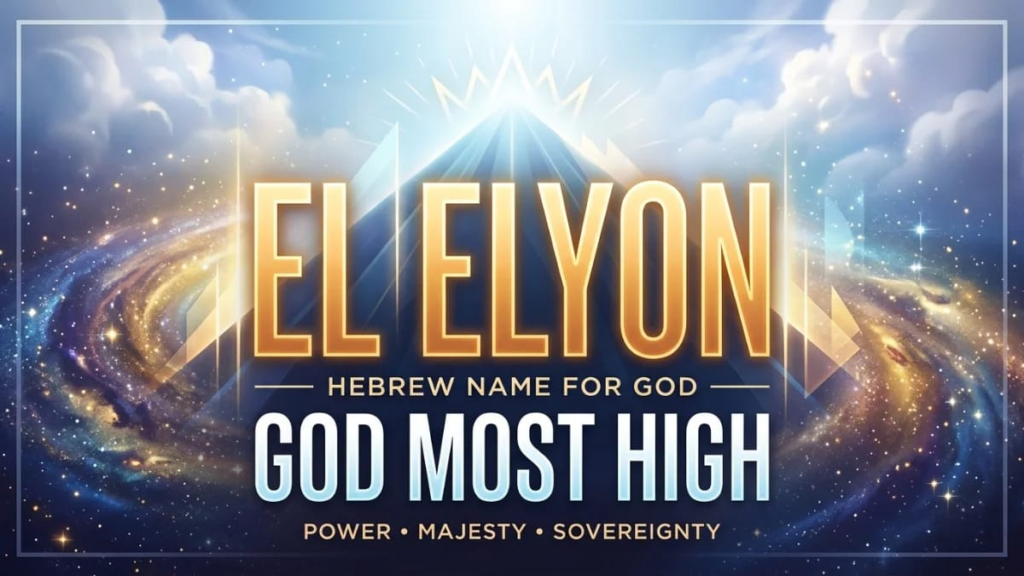
- El Elyon — God Most High. Spoken by the priest-king Melchizedek while blessing Abram in Genesis 14:18-20, this name places God above every earthly ruler and rival power.
- Adonai — Lord, Master. Used by Abram in Genesis 15:2 while questioning God about a promised heir, Adonai expresses submission to God’s authority rather than describing His nature directly.
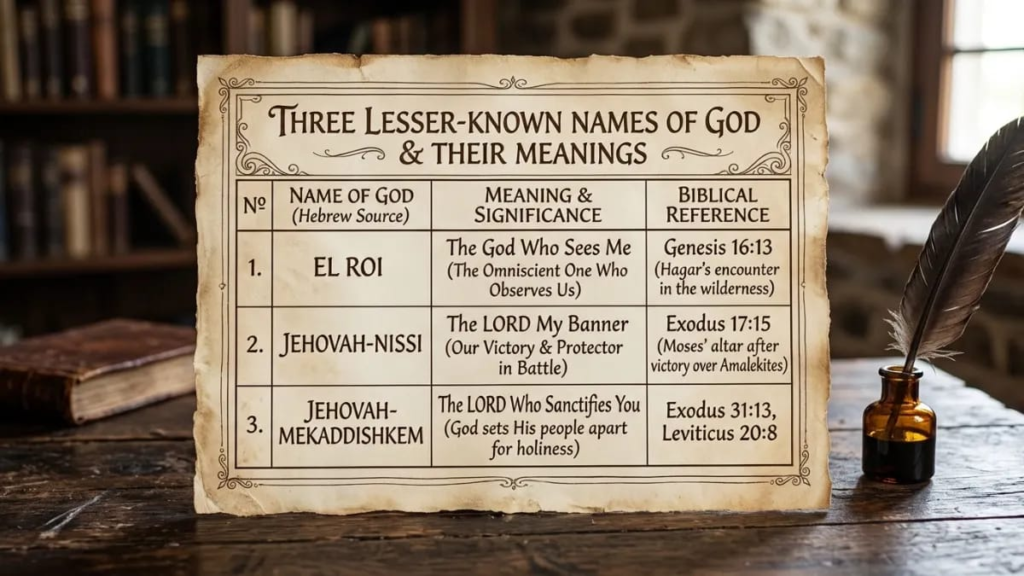
- El Roi — The God Who Sees Me. Spoken by Hagar in Genesis 16:13 after she fled into the wilderness alone and pregnant, this is the only name in the Bible given to God by a woman.
- El Shaddai — God Almighty, All-Sufficient. Revealed to a ninety-nine-year-old Abraham in Genesis 17:1, just before God promised him a son. The name speaks directly to human limitation met by divine sufficiency.
- El Olam — The Everlasting God. Abraham calls on this name in Genesis 21:33 after planting a tamarisk tree in Beersheba, pointing to a God who exists outside of time.
The Compound Yahweh Names: God’s Promises in Action
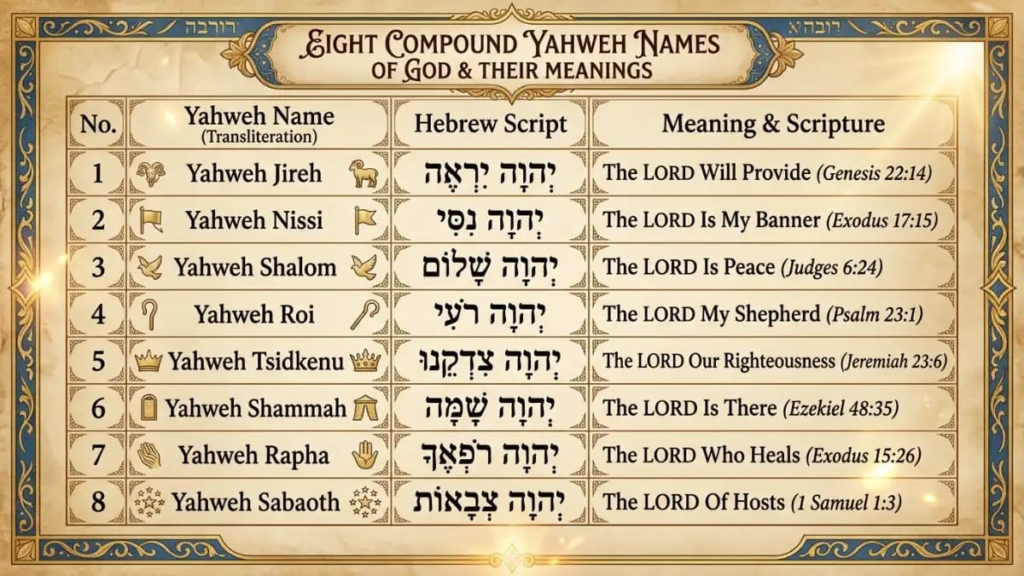
Several of the names of God in the Bible pair “Yahweh” (rendered “Jehovah” in older translations) with a description of what He did at a specific moment. Each one began as a real event and became a lasting title.
| Name | Meaning | Where It Appears |
| Yahweh Jireh | The Lord Will Provide | Genesis 22:14 |
| Yahweh Rapha | The Lord Who Heals | Exodus 15:26 |
| Yahweh Nissi | The Lord Is My Banner | Exodus 17:15 |
| Yahweh Mekaddishkem | The Lord Who Sanctifies You | Exodus 31:13 |
| Yahweh Shalom | The Lord Is Peace | Judges 6:24 |
| Yahweh Sabaoth | The Lord of Hosts | 1 Samuel 1:3 |
| Yahweh Rohi | The Lord Is My Shepherd | Psalm 23:1 |
| Yahweh Tsidkenu | The Lord Our Righteousness | Jeremiah 23:6 |
| Yahweh Shammah | The Lord Is There | Ezekiel 48:35 |
This pattern shows how naturally the names of God in the Bible expanded as Israel’s relationship with Yahweh deepened, with each new title anchored to something that had actually happened rather than invented in the abstract.
Together, these nine names of God in the bible read almost like a timeline of Israel’s early history. Yahweh Nissi, for instance, was named by Moses immediately after Israel’s first military victory over the Amalekites, turning a battlefield into a permanent reminder of who had actually won the fight.
Names That Describe God’s Character and Power
Names of God in the Bible is tied to a single event. Some describe an ongoing trait — a permanent feature of who He is rather than a one-time act.
- Qanna — Jealous God. Used in Exodus 34:14 to explain why God forbids worship of other gods. The jealousy described here is closer to covenant faithfulness than envy — it protects an exclusive relationship rather than guarding wounded pride.
- Rock — Unshakeable Refuge. Moses uses this metaphor in Deuteronomy 32:4 to describe God’s total reliability, in contrast to anything that shifts or erodes over time.
- Go’el — Redeemer, Kinsman-Redeemer. Job declares in Job 19:25 that his Redeemer lives, using a Hebrew legal term for a relative who steps in to rescue or repay a debt on someone else’s behalf.
- Ancient of Days — Eternal Judge. Daniel’s vision in Daniel 7:9 pictures God seated on a fiery throne, presiding over history as the one whose authority never expires.
Names of God in the New Testament
The New Testament continues revealing the names of God in the Bible, increasingly through titles connected directly to Jesus and the Holy Spirit.
- Immanuel — God With Us. Prophesied in Isaiah 7:14 and fulfilled at Christ’s birth in Matthew 1:23.
- Jesus (Yeshua) — The Lord Is Salvation. The name given to Jesus in Matthew 1:21, built from the Hebrew word for “Yahweh saves.”
- Christ (Messiah) — Anointed One. Peter’s confession in Matthew 16:16 identifies Jesus by this title, marking Him as the long-promised deliverer.
- Son of God — Declared by God the Father at Jesus’ baptism in Matthew 3:17, affirming a unique, divine relationship.
- Abba — An intimate Aramaic word for “Father,” used by Jesus in Mark 14:36 and echoed by believers in Romans 8:15 — closer in tone to “Dad” than to a formal title.
- Holy Spirit — The third person of the Trinity, described descending like a dove at Jesus’ baptism in Luke 3:22.
- Logos — The Word. John opens his Gospel in John 1:1 by identifying God’s eternal self-expression, present from the very beginning.
- Lamb of God — Identified by John the Baptist in John 1:29, pointing to Jesus’ role as the final sacrifice for sin.
- The Way, the Truth, and the Life — Jesus’ own description of Himself in John 14:6, naming Him as the sole path to God.
- Parakletos — Comforter, Advocate, Helper. A Greek term Jesus uses for the Holy Spirit in John 14:16, describing one called alongside to help.
- Alpha and Omega — The first and last letters of the Greek alphabet, used by God to describe Himself as the beginning and end of all things in Revelation 1:8.
- King of Kings and Lord of Lords — Jesus’ title in Revelation 19:16, describing supreme authority over every earthly and spiritual ruler.
How These Names Shape Prayer and Worship
Knowing these names of God in the Bible is not just an academic exercise. Throughout Scripture, people call on the specific name that matches their specific need — Abraham built an altar to Yahweh Jireh after provision, Gideon built one to Yahweh Shalom after fear gave way to peace.
Praying one of these names of God in the Bible, rather than a generic request, can sharpen what is actually being asked for. Calling on Yahweh Rapha names a need for healing directly; calling on El Roi names a need to be seen and known rather than simply helped.
You can read the relevant Scripture passages on BibleGateway to explore these names in their biblical context.
Frequently Asked Questions
How many names of God does the Bible give for God?
Scholars count more than twenty distinct names of God in the Bible across the Old and New Testaments, though the exact number depends on whether compound names and descriptive titles are counted separately.
What is the most important name of God in the Bible?
Yahweh (YHWH) is generally considered the most significant, since it is God’s personal, self-revealed covenant name rather than a general title.
Why is the name Yahweh not pronounced in Jewish tradition?
Ancient Jewish scribes considered the name too sacred to say aloud and substituted “Adonai” whenever it appeared in the text, a tradition still reflected in most English Bible translations today.
Where does the name “Jehovah” come from?
“Jehovah” comes from blending the consonants of YHWH with the vowels of “Adonai.” It is a reading tradition rather than a separate Hebrew word, which is why most modern scholars use “Yahweh” instead.
What is the difference between Elohim and Yahweh?
Elohim is a general term for God that emphasizes power and creation, while Yahweh is God’s specific, personal covenant name revealed to Moses.
Is El Roi the only name of God given by a woman?
Yes. Hagar is the only person in Scripture recorded giving God a name, calling Him El Roi, “the God who sees me,” in Genesis 16:13.
Whichever entry point you start from, the names of God in the Bible are best read as a growing testimony rather than a static list — a record of how He revealed a new side of His character exactly when His people needed to know Him differently.