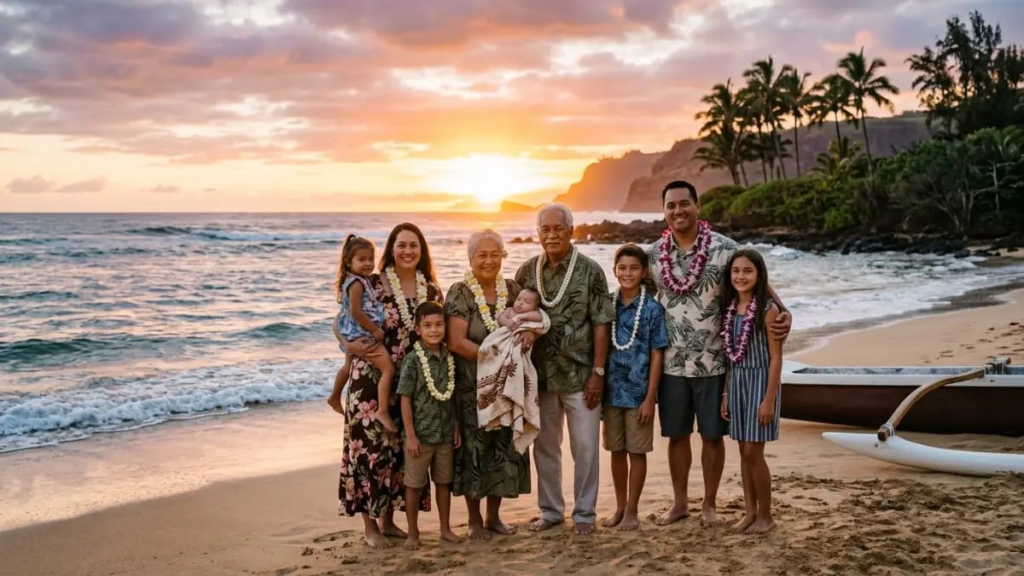

Hawaiian last names carry more history than most surnames people encounter. Many were never surnames at all until a royal decree made them one, and nearly every name still holds a literal meaning in oleo Hawaiʻi, the Hawaiian language, rather than functioning as a sound with no translation.
This guide groups Hawaiian last names by style and meaning rather than alphabetically, so you can see how ocean names, chiefly names, and missionary-era names each tell a different part of the islands’ story. Whether you are researching family history, choosing a meaningful name, or simply curious about Hawaiian culture, this list is built to make that history easy to follow.
By the end, you will understand how Hawaiian surnames came to exist, what shapes their meanings, and you will have forty names sorted into clear categories.
Where Hawaiian Last Names Come From
Direct answer
Hawaiian last names did not exist before 1860. Kamehameha IV’s Act to Regulate Names required families to fix a surname, usually drawn from a father’s given name, and required newborns to also receive a Christian first name. That single law is why so many Hawaiian surnames today blend native Hawaiian words with biblical or missionary influence.
Before that act, Hawaiians used single personal names, often tied to an event, a place, or a family memory, and passed no fixed surname down the line. Once surnames became mandatory, many families simply kept an ancestor’s existing Hawaiian name as the new fixed surname, which is why so many Hawaiian last names still translate directly into everyday words like house, sea, or love, rather than reading as a name with no clear meaning.
This history also explains why Hawaiian surnames split into a few recognizable groups: names rooted in nature and place, names tied to aliʻi or chiefly lines, and names adapted from Christian missionaries who arrived in the early nineteenth century.
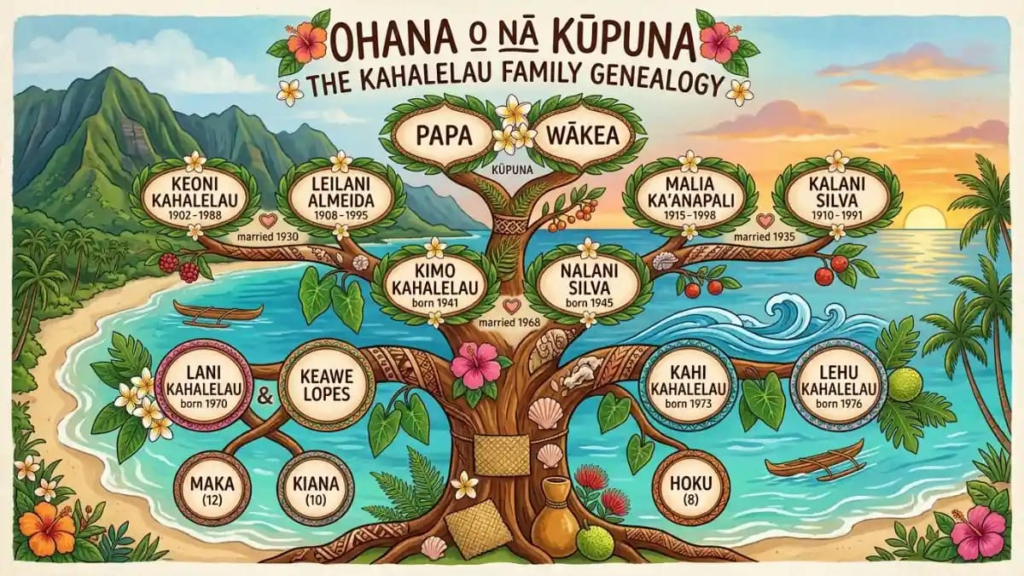
Ocean and Water Names
These Hawaiian last names reflect Hawaii’s relationship with the sea, and many were originally used by families connected to fishing, seafaring, or coastal life.
1. Kai
Means sea or ocean, one of the shortest and most widely used Hawaiian surnames.
2. Wai
Means water, often paired with other words to form longer compound names.
3. Aukai
Means seafarer or one who travels by sea, historically linked to sailing families.
4. Waiola
Means water of life, carrying both a literal and a spiritual sense of renewal.
5. Holokai
Means seafaring person, describing someone whose life centers on ocean travel.
Sky and Heavenly Names
These surnames use “lain,” the Hawaiian last names for sky or heaven, a root that also signals royal or exalted status in many family names.
6. Lani
Means sky or heaven, and appears inside many longer Hawaiian names.
7. Aolani
Means heavenly cloud, a name associated with beauty and elevated status.
8. Kealani
Means the heavens or clear skies, often carried by families with coastal roots.
9. Hoku
Means star, symbolizing guidance and used across both first and last names.
10. Ululani
Means heavenly inspiration, reflecting spiritual or divine connection.
Names built on “lain” often signaled a family’s closeness to aliʻi lineage historically, since the word itself was closely tied to chiefs and royalty in pre-contact Hawaii.

Nature and Land Names
These surnames connect families to the physical landscape, plants, and everyday elements of island life.
11. Lau
Means leaf, symbolizing growth and often used in botanical family names.
12. Alama
Means earth and eternity, suggesting permanence and connection to land.
13. Manu
Means bird, a name associated with freedom and movement.
14. Makani
Means wind or breeze, evoking the trade winds that shape island weather.
15. Ailana
Means island, a grounded name tied directly to place.
Love and Beauty Names
These Hawaiian last names describe affection, beauty, or admired qualities, and many are shared between first names and surnames in Hawaiian families.
16. Kealoha
Means the love, one of the most recognized Hawaiian surnames in everyday use.
17. Nani
Means beautiful, used to describe both people and places.
18. Nohea
Means lovely, a softer variation often paired with other descriptive names.
19. Leilani
Means heavenly flower, sometimes translated as royal child.
20. Malia
Means calm or peaceful, the Hawaiian rendering of the name Maria.

Chiefly and Noble Names
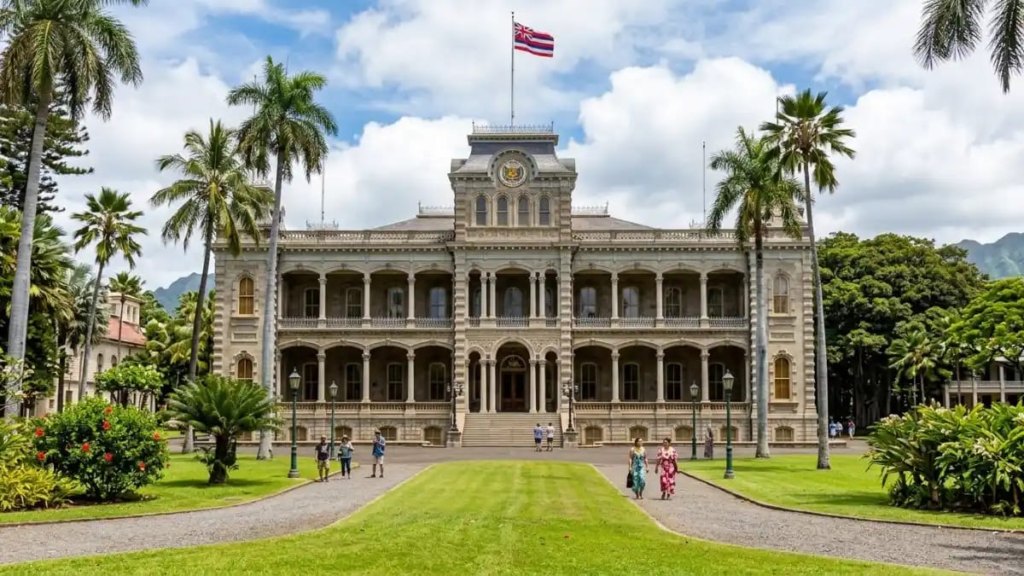
These surnames trace back to families connected to aliʻi, the chiefly class that governed Hawaiian society before Western contact.
21. Keliʻī
Means the chief, a direct reference to leadership and rank.
22. Keawe
Associated with the bearer or the southern cross, linked to several historic aliʻi lines.
23. Haku
Means supervisor or overseer, a name tied to authority and responsibility.
24. Haulani
Means imperial ruler, combining rank with the heavenly root “lani.”
25. Hoapili
Means close companion, historically used by a trusted advisor within the royal court.
Strength and Warrior Names
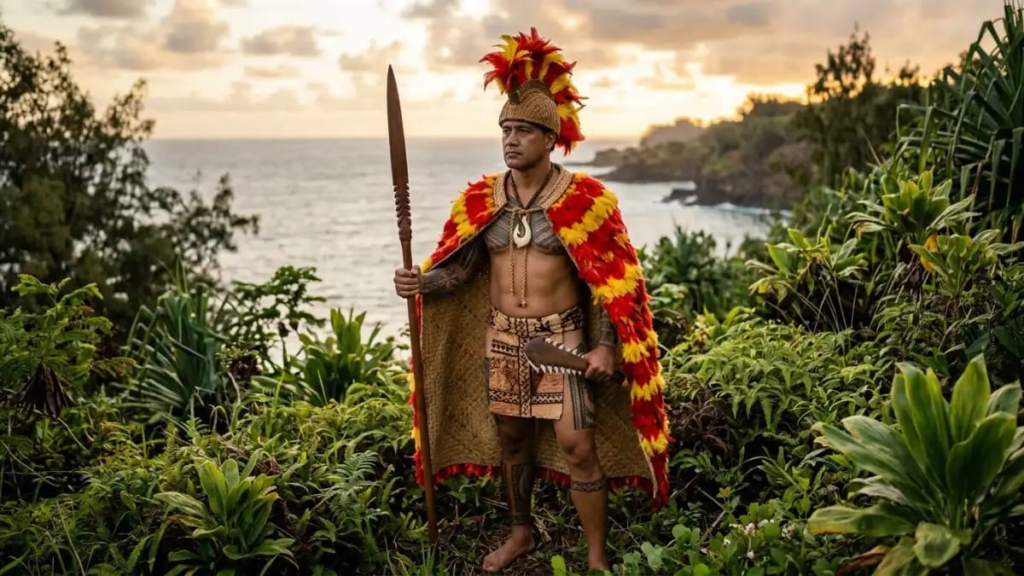
These names describe physical strength, courage, or resilience, and were often given to sons expected to carry family responsibility.
26. Kekoa
Means the warrior, one of the most common Hawaiian surnames still in use today.
27. Ikaika
Means strong or powerful, used to signal determination.
28. Kaimana
Means power of the ocean, sometimes also linked to the word diamond.
29. Lui
Means famous warrior, a shorter name with a martial history.
30. Kanoa
Means the free one, associated with independence rather than force.
Christian and Missionary-Era Names
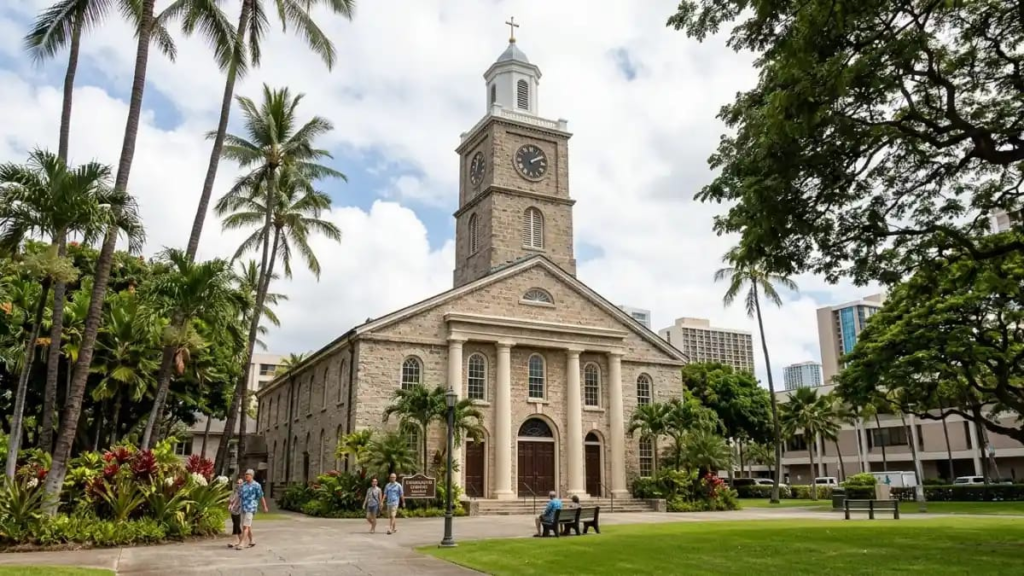
After the 1860 Act to Regulate Names, many families adapted biblical names into Hawaiian phonetics, since the Hawaiian alphabet has no letters for several English consonant sounds.
31. Iona
The Hawaiian rendering of Jonah, common among early Christian converts.
32. Iosua
The Hawaiian rendering of Joshua, still used as both a first and last name.
33. Hekekia
The Hawaiian rendering of Hezekiah, reflecting Old Testament influence.
34. Akamu
The Hawaiian rendering of Adam, also read as “of the earth.”
35. Anela
Adapted from the name Angela, tied to the Greek word for messenger.
Everyday, Place, and Occupation Names
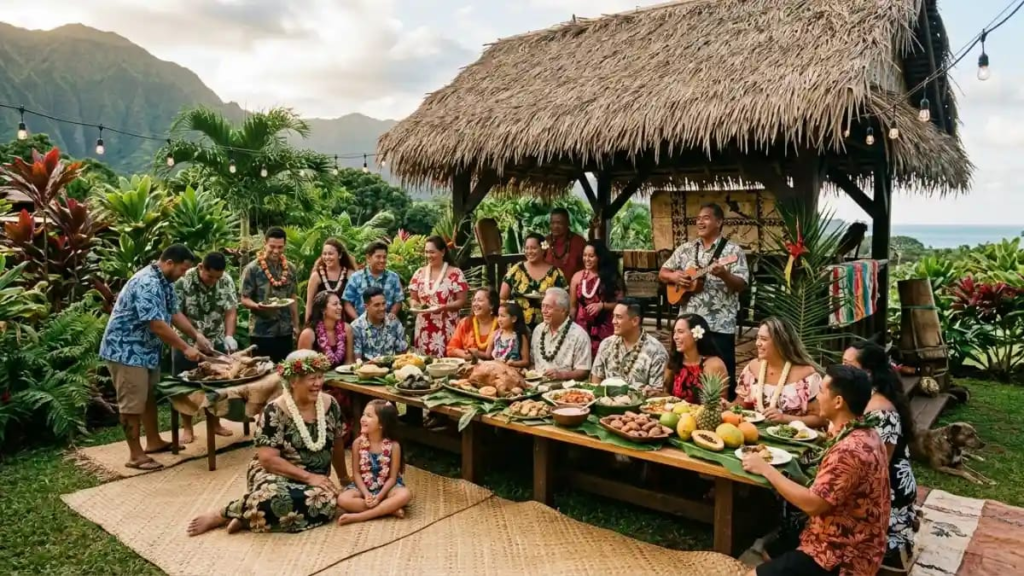
These surnames describe ordinary roles, homes, or trades, showing that not every Hawaiian last name carries royal or spiritual weight.
36. Kahale
Means the house, one of the most literal and common Hawaiian surnames.
37. Mahiʻai
Means farmer, describing a family’s traditional occupation.
38. Kalama
Means the torch, associated with light and guidance.
39. Akana
Means bright, a name with roots connecting Hawaiian and Japanese families.
40. Pomaikaʻi
Means blessed or fortunate, often used to mark a family’s good standing.
Quick Reference Table of Hawaiian Last Names
| Category | Example Names |
| Ocean and Water | Kai, Wai, Aukai |
| Sky and Heavenly | Lani, Hoku, Aolani |
| Nature and Land | Lau, Manu, Makani |
| Love and Beauty | Kealoha, Nani, Leilani |
| Chiefly and Noble | Keliʻī, Keawe, Hoapili |
| Strength and Warrior | Kekoa, Ikaika, Kaimana |
| Christian / Missionary-Era | Iona, Iosua, Akamu |
| Everyday and Occupation | Kahale, Mahiʻai, Pomaikaʻi |
Common Mistakes When Researching Hawaiian Last Names
One common mistake is dropping the ʻokina (the glottal stop mark) and kahākō (macron), which changes both pronunciation and meaning. Names like Keliʻī and Pomaikaʻi lose accuracy without these marks, even though they are often left out casually online.
Another mistake is assuming every Hawaiian-sounding surname is Native Hawaiian in origin. Many families carry names adapted from Japanese, Portuguese, or Chinese immigrant communities that settled in Hawaii, so a name’s sound alone does not confirm its full ancestry.
A third mistake is treating Hawaiian first names and last names as separate categories. In practice, many names like Kealoha, Kai, and Leilani are used interchangeably as either, which is unusual compared to most Western naming systems.
How Hawaiian Last Names Are Used Today
Modern Hawaiian families often carry a mix of names from more than one category on this list, reflecting generations of intermarriage between Native Hawaiian, missionary, and immigrant families. It is common to see a chiefly-rooted first name paired with a missionary-era or immigrant surname within the same household.
Genealogical researchers tracing Hawaiian ancestry generally start with the 1860 Act to Regulate Names as a reference point, since records before that date rarely include a consistent surname to search. Understanding which category a name falls into can also help identify which wave of Hawaiian history a particular branch of a family passed through.
Final Thoughts on Hawaiian Last Names
A Hawaiian last name carries history that most surnames never had to survive, from a royal decree that created them to the missionary influence that reshaped them. Whether you are drawn to ocean names, chiefly names, or the biblical adaptations that followed 1860, each one reflects a real thread in Hawaii’s family history rather than a name chosen for sound alone.
Keep this list handy whenever you are researching Hawaiian surnames, and revisit it any time a new name crosses your path and you want to understand where it truly comes from.
Frequently Asked Questions
What are the most common Hawaiian last names?
Kekoa, Kealoha, Kahale, and Akana are among the most frequently recorded Hawaiian surnames today.
What do most Hawaiian last names mean?
Most translate directly into everyday Hawaiian words tied to nature, character, or family roles, such as Kai for sea or Nani for beautiful.
Why do some Hawaiian last names sound biblical?
After 1860, families adapted Christian names into Hawaiian phonetics, producing surnames like Iona and Akamu from Jonah and Adam.
Are Hawaiian last names the same as Hawaiian first names?
Often yes. Many Hawaiian names, including Kealoha and Leilani, are used as both first and last names within the same family.
How can I trace the meaning of my own Hawaiian last name?
Start by checking whether the name matches a known category above, then consult a Hawaiian dictionary or genealogical record, since spelling variations can shift the meaning slightly.