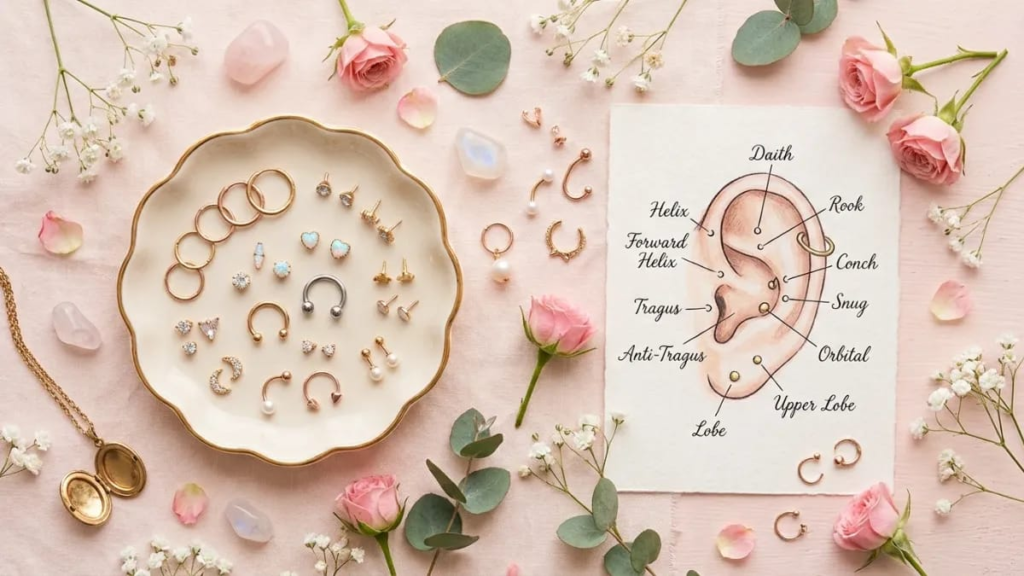

Piercing names can get confusing fast, since most of them describe a spot on the body that doesn’t have an obvious everyday name. “Daith” and “conch” mean nothing until someone points at an ear and shows you.
This guide sorts piercing names by where they actually go: ears, face, mouth, and body. Each one includes a plain description of the placement, so you know exactly what you’re looking at before booking an appointment.
By the end you’ll be able to tell a rook from a snug, and a Monroe from a Medusa, without any guesswork.
A quick note on sizing: most piercings start in a standard 18 or 16 gauge, with thicker gauges used for certain cartilage or surface piercings. Your piercer will recommend the right size for the specific placement.
Why Do Piercing Names Have So Many Different Names?
Piercing names mostly come from anatomy, not fashion trends, which is why so many of them sound unfamiliar even to people with several piercings already.
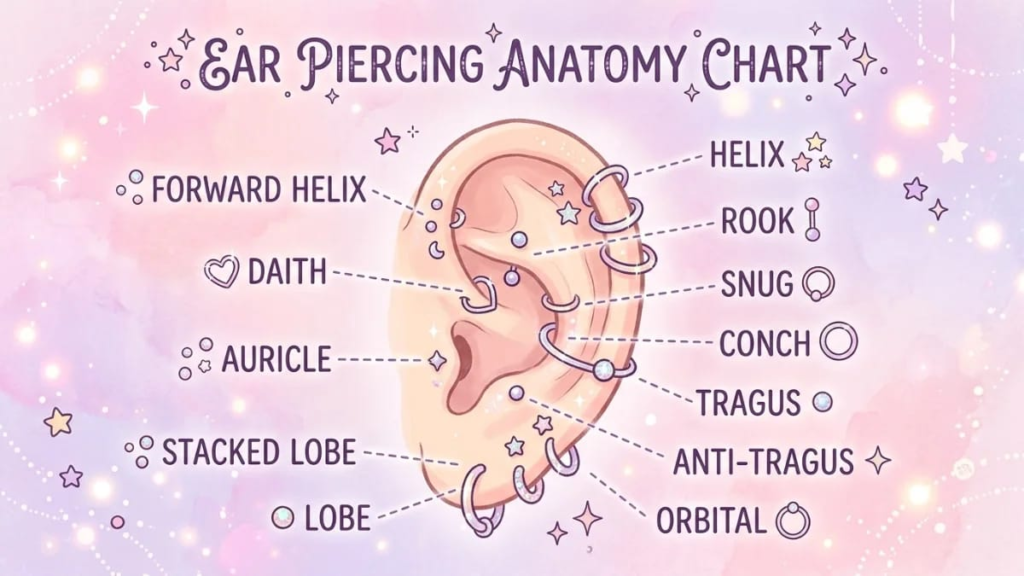
Ear anatomy alone has more named parts than most people realize — helix, tragus, conch, and rook are all real anatomical terms, not made-up piercing slang.
A few piercing names come from elsewhere entirely. “Monroe” nods to Marilyn Monroe’s beauty mark, and “Prince Albert” is named after a 19th-century royal. Most others simply describe where the jewelry sits.
Knowing the correct name also helps at the studio itself. Piercers work off these exact terms, so being able to say “forward helix” instead of “the one near my temple” makes the consultation faster and more accurate.
Ear Piercing Names
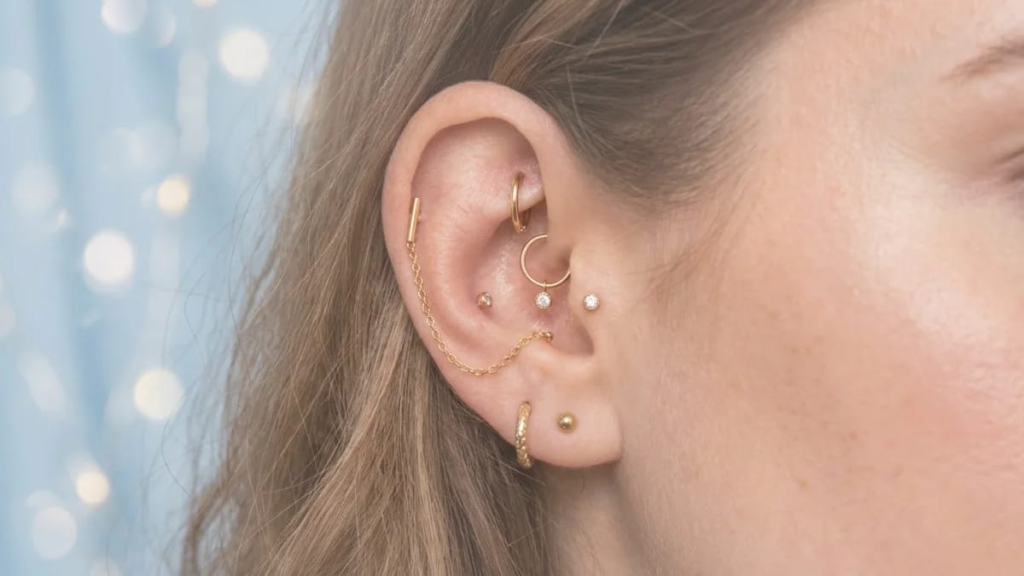
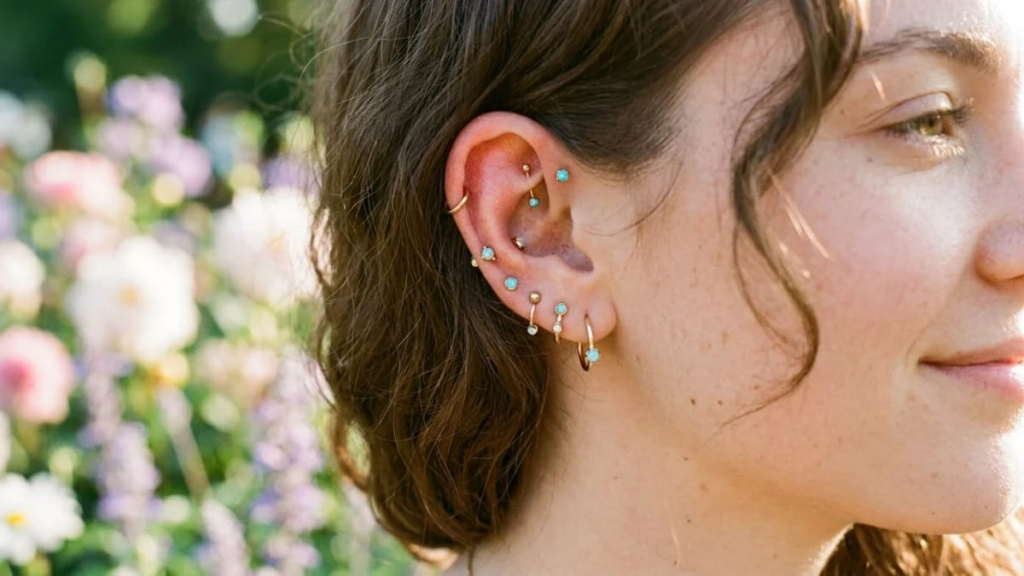
The ear has more piercing names spots than any other part of the body, which is why ear-piercing names make up the longest list here.
- Lobe — the soft, fleshy bottom of the ear — the most common and easiest piercing to heal.
- Helix — the upper outer rim of cartilage, often pierced more than once.
- Forward Helix — the small ridge of cartilage closest to the face, just above the tragus.
- Industrial — two helix piercings connected by a single straight barbell.
- Tragus — the small flap of cartilage that partly covers the ear canal.
- Anti-Tragus — the small bump of cartilage directly across from the tragus.
- Conch — the shell-shaped middle section of the ear, pierced as “inner” or “outer” conch.
- Rook — the ridge of cartilage just above the tragus, inside the ear.
- Daith — the innermost fold of cartilage, sometimes linked — without strong scientific backing — to migraine relief.
- Snug — the inner ridge of cartilage, generally considered one of the tougher piercings to heal.
- Orbital — two piercings in the same area connected by one continuous ring.
- Auricle — the flat cartilage along the outer edge of the ear, between the helix and lobe.
- Transverse Lobe — a horizontal piercing running through the lobe from front to back, rather than the usual front-to-back-facing hole.
- Stacked Lobe — not a single placement but multiple lobe piercings arranged in a row.
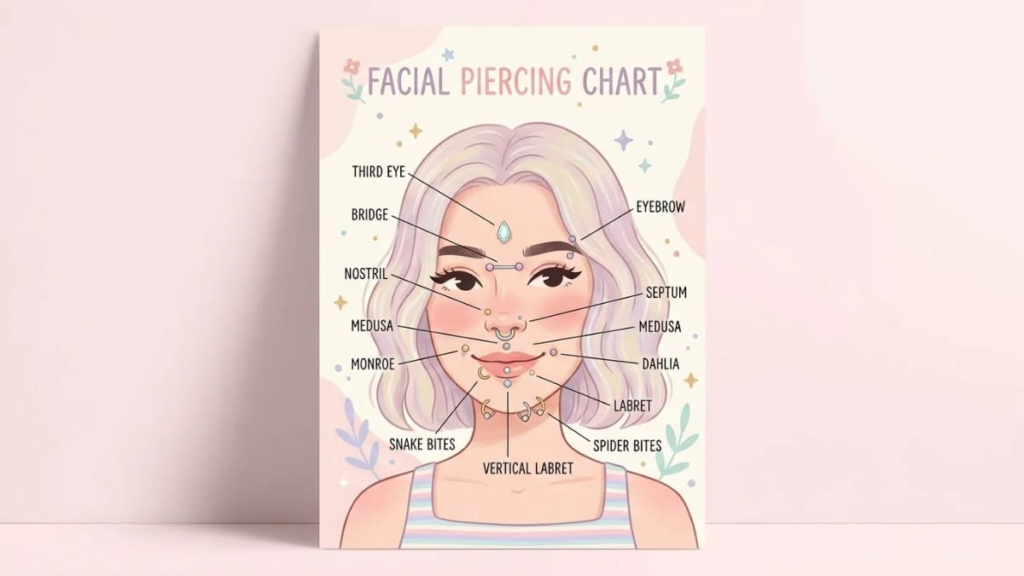
Facial Piercing Names
Facial piercing names tend to describe either the feature they sit on or, occasionally, a resemblance to something else entirely.
- Nostril — the most common facial piercing, placed through the side of the nose.
- Septum — through the thin strip of tissue between the nostrils.
- Bridge — a horizontal, surface-level piercing across the bridge of the nose.
- Nasallang — a single piece of jewelry running through both nostrils and the septum.
- Eyebrow — through the skin at the outer edge of the eyebrow.
- Anti-Eyebrow — below the eye, near the top of the cheekbone.
- Third Eye — a vertical piercing centered between the eyebrows.
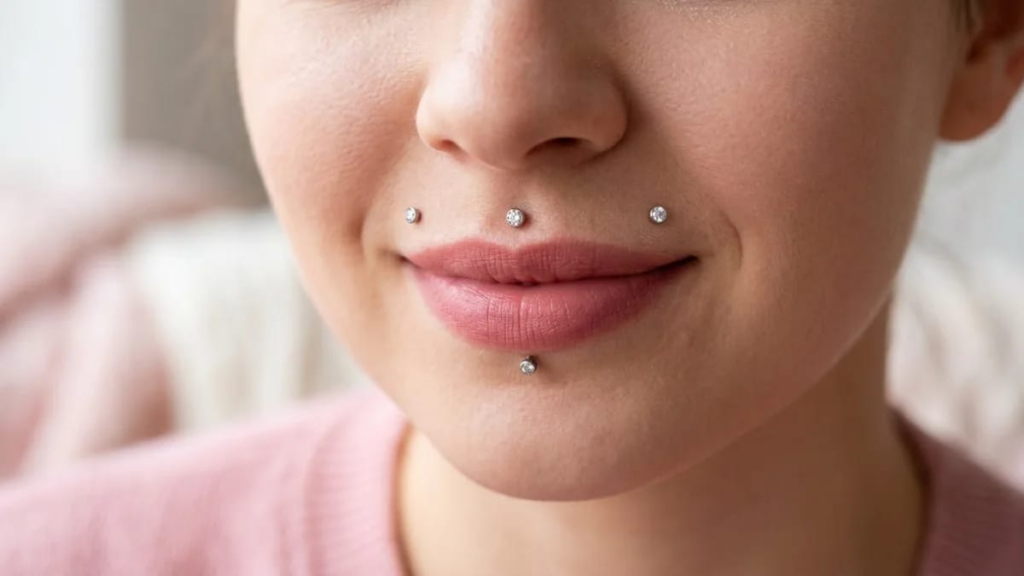
- Medusa (Philtrum) — centered directly above the upper lip.
- Monroe — off-center above the lip, placed to resemble a classic beauty mark.
- Labret — centered directly below the lower lip.
- Dahlia (Joker) — placed at one or both corners of the mouth.
- Snake Bites — two piercings placed side by side on the lower lip.
- Spider Bites — two piercings placed close together on one side of the lower lip.
- Ashley — centered below the lower lip with jewelry that sits flat against the inside of the mouth, similar to a labret but positioned differently.
- Vertical Labret — a single piece of jewelry that enters below the lip and exits through the lip itself.
Oral Piercing Names
Oral piercings names heal fast because saliva actually helps fight infection, but they also carry a higher risk of chipped teeth if the jewelry is too large.
- Tongue — through the center of the tongue, usually vertically.
- Venom Bites — two piercings placed side by side on the tongue.
- Smiley (Frenulum) — through the small strip of tissue connecting the upper lip to the gum.
- Web Piercing — through the thin webbing underneath the tongue.

Body Piercing Names
These piercing names cover the torso and beyond, where healing tends to take the longest of any category.
- Navel — through the skin at the top or bottom edge of the belly button.
- Nipple — through the nipple, placed horizontally or vertically.
- Surface Piercing — a flat piercing through skin with no natural protrusion, like the nape or chest.
- Dermal (Microdermal) — a single-point piercing anchored just under the skin, with no visible entry or exit point.
- Hip — a surface piercing running along the hip bone.
Less Common Piercing Names
A handful of piercing names rarely come up in casual conversation, either because they’re less common or because they require a specialist piercer with specific experience.
- Prince Albert — a male genital piercing named after a 19th-century British royal.
- Christina — a surface piercing placed at the top of the pubic mound.
- Apadravya and Ampallang — vertical and horizontal male genital piercings with roots in Southeast Asian body art traditions.
Piercing names in this category need a piercer who specializes in them specifically, along with a longer, more careful healing period than most other types.
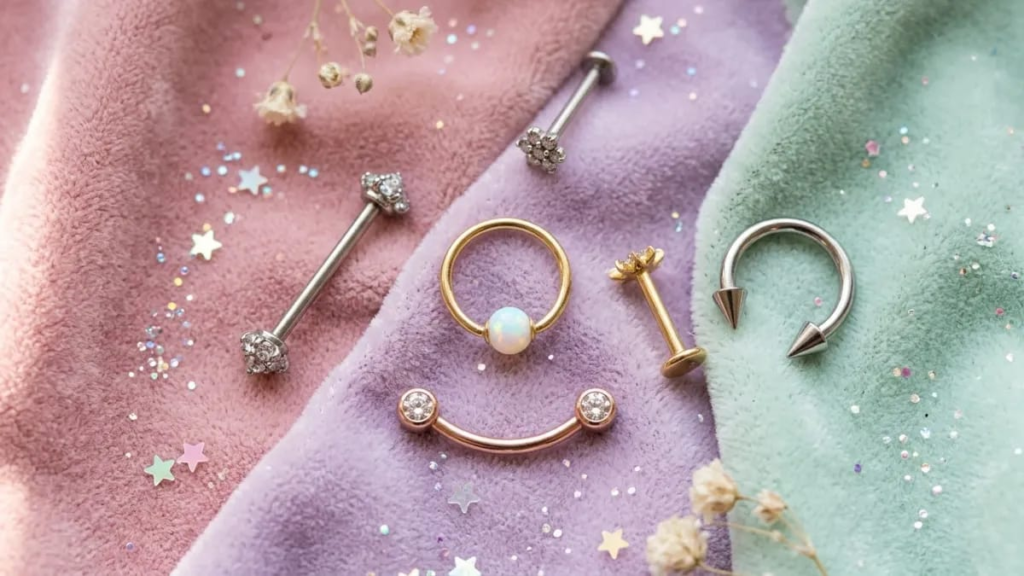
Jewelry Types of Piercing Names Used for Different Piercings
The piercing names tells you where the jewelry goes; the jewelry type affects how comfortable and easy to maintain it is.
- Stud — a single decorative piece with a flat back, most common for lobes and nostrils.
- Captive Bead Ring (CBR) — a hoop with a removable bead that snaps into place, often used in cartilage piercings.
- Barbell — a straight bar with a ball or gem on each end, common for tongue and eyebrow piercings.
- Curved Barbell — similar to a straight barbell but bent to fit curved anatomy, like the navel or eyebrow.
- Labret Stud — a flat-backed post designed to sit comfortably against the inside of the mouth.
- Circular Barbell (Horseshoe) — a curved ring with removable balls on each end, often used for septum piercings.
Choosing the right jewelry type for a given placement matters almost as much as the placement itself, since the wrong shape can trap moisture or press against skin awkwardly during healing.
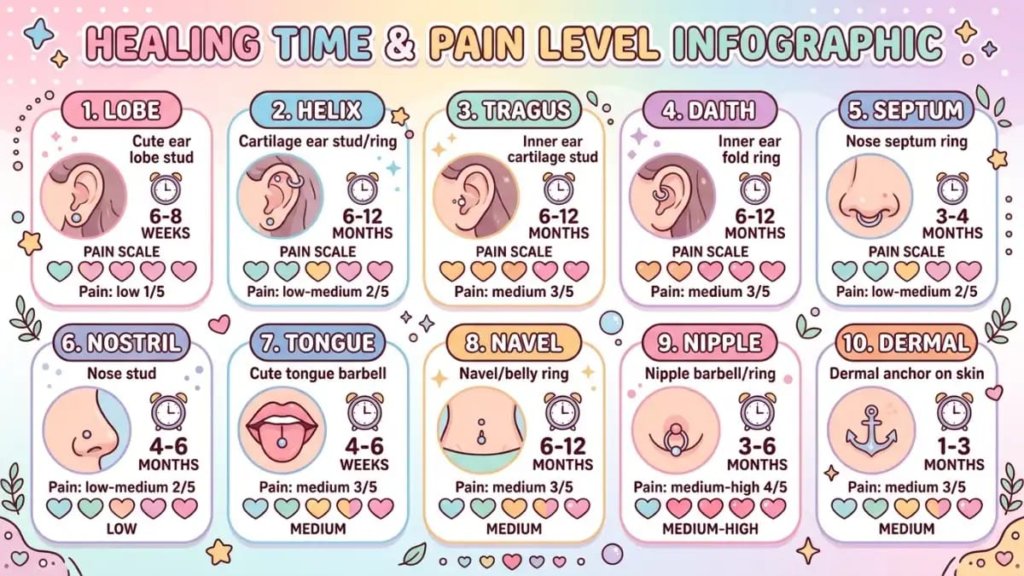
Healing Time and Pain Level at a Glance
These numbers are general ranges, not guarantees — healing speed depends heavily on aftercare, jewelry quality, and individual body chemistry.
| Piercing | Typical Healing Time | General Pain Level |
| Lobe | 6–8 weeks | Low |
| Helix | 3–6 months | Low to medium |
| Tragus | 3–6 months | Medium |
| Daith | 6–9 months | Medium to high |
| Septum | 2–3 months | Medium |
| Nostril | 2–4 months | Low to medium |
| Tongue | 3–4 weeks | Medium |
| Navel | 6–9 months | Medium |
| Nipple | 6–9 months | Medium to high |
| Dermal | 2–3 months | Medium |
How to Choose Your First (or Next) Piercing
Picking a piercing name comes down to matching the placement to your lifestyle, your pain tolerance, and how much aftercare you’re actually willing to do.
- Start with a lobe or a simple cartilage piercing if this is your first — they’re forgiving and well understood.
- Think about your job or school dress code before picking anything highly visible.
- Ask how long the piercer has been doing that specific placement, not just piercing in general.
- Check that the studio uses implant-grade titanium or steel, not cheap alloy starter jewelry.
- Be honest about your sleep position — side sleepers often struggle with certain ear placements.
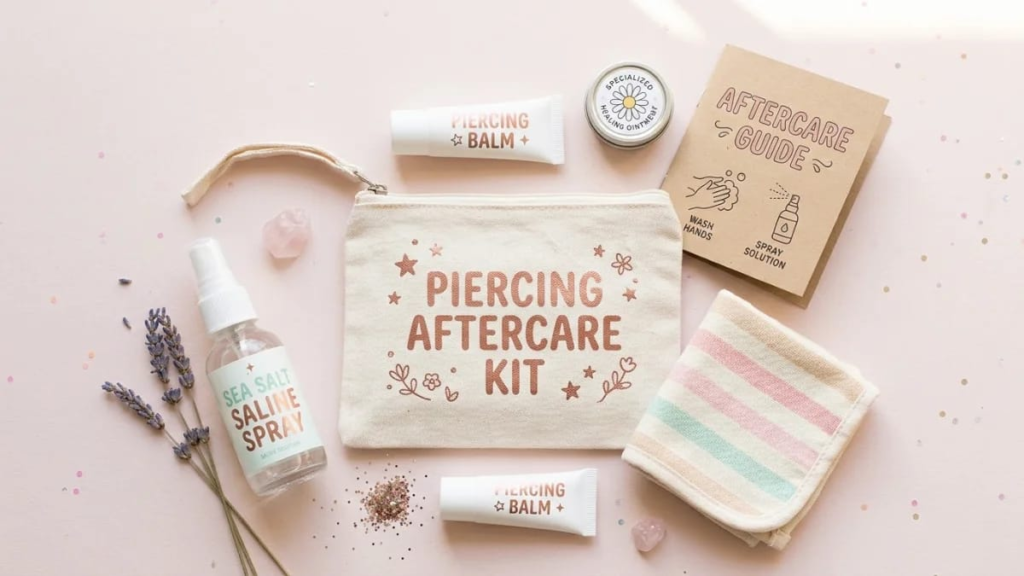
Basic Aftercare Tips for New Piercings Names
Aftercare matters more than the piercing style itself when it comes to avoiding infection or rejection.
- Clean the area with a sterile saline solution, not alcohol or hydrogen peroxide.
- Avoid touching or rotating the jewelry unless you’re actively cleaning it.
- Sleep on a travel pillow or avoid pressure on new ear or facial piercings.
- Skip swimming pools, hot tubs, and open water until the piercing is fully healed.
- Watch for excessive redness, thick discharge, or fever, and see a professional if any appear.
Most healthy healing looks boring: a little tenderness, maybe some mild swelling for the first few days, then gradual improvement. Anything dramatic is worth a second opinion.
Common Piercing Mistakes to Avoid
Most piercing problems trace back to a handful of avoidable mistakes, not bad luck.
- Choosing a piercer based on price alone instead of experience with that specific placement.
- Downsizing jewelry too early, before swelling has fully gone down.
- Using cleaning products that are too harsh, which can irritate healthy healing tissue.
- Changing jewelry yourself before the piercing has actually finished healing.
- Ignoring early signs of irritation instead of getting them checked quickly.
Most of these mistakes come from impatience rather than bad information — piercing healing genuinely can’t be rushed, no matter how careful the aftercare routine is.
Interesting Facts About Piercing History
Piercing is far older than most modern trends suggest, with evidence stretching back thousands of years across many unrelated cultures.
- Ötzi the Iceman, a mummy dating back over 5,000 years, was found with stretched earlobes.
- Nose piercings are believed to have entered Indian culture around the 16th century through Middle Eastern influence.
- Ancient Egyptian pharaohs reportedly restricted certain piercings to royalty only.
- The septum piercing has roots in numerous indigenous cultures across the Americas, Africa, and Asia.
- Cartilage piercing didn’t become mainstream in Western fashion until the 1970s punk movement.
Final Thoughts
Piercing names look intimidating on a chart, but they’re really just anatomy labels once you learn a handful of them. Ear anatomy alone covers more than half the list here.
Take your time picking a placement, choose a piercer who specializes in it, and follow aftercare closely. The name matters far less than how well it’s done and cared for afterward.
If you’re still deciding, start simple. A lobe or a single, well-healed cartilage piercing tells you a lot about your own healing tendencies before you commit to anything more involved.
FAQs
What’s the least painful piercing to start with?
A standard earlobe piercing is generally the mildest option.
How do I know if a piercing is infected?
Look for spreading redness, thick discharge, or fever — mild redness and tenderness are normal at first.
Can I change jewelry before a piercing fully heals?
It’s best to wait, since early changes raise the risk of irritation or infection.
Do cartilage piercings hurt more than lobe piercings?
Generally yes, since cartilage has less blood flow and takes longer to heal.
Is the daith piercing actually proven to help migraines?
No strong scientific evidence supports this claim, despite its popularity.
How long should I wait between getting multiple piercings?
Many piercers suggest spacing out healing-intensive piercings rather than getting several at once.
What metal is safest for new piercings?
Implant-grade titanium or steel is the safest standard for initial jewelry.
Is it normal for a new piercing to feel warm?
Mild warmth in the first few days is common; spreading heat or fever is not.