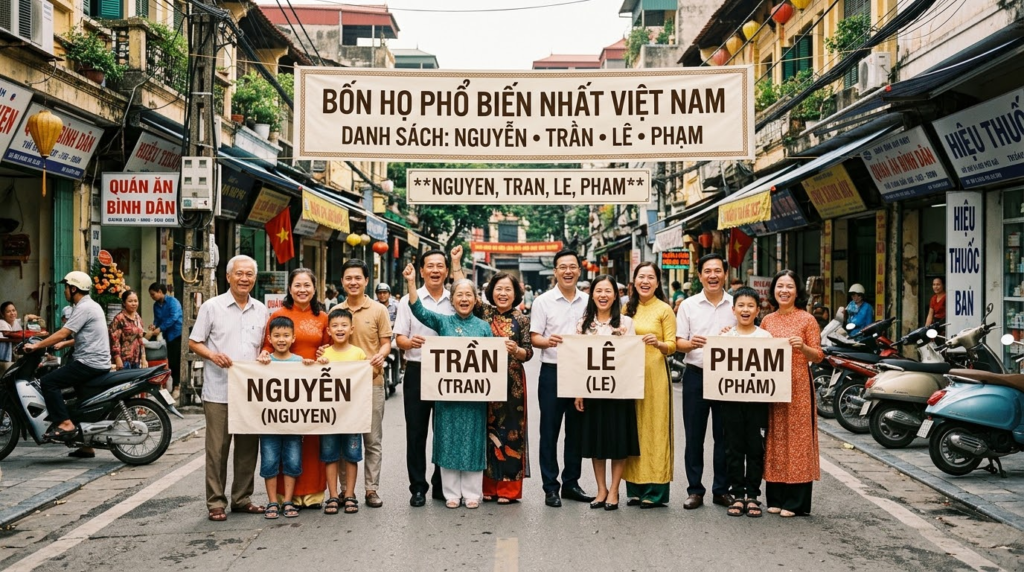

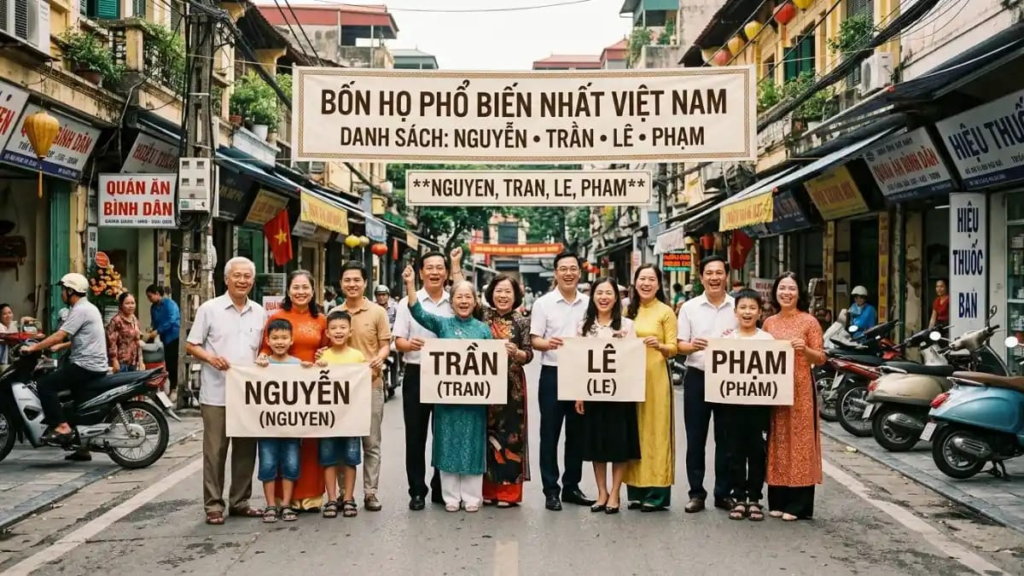
Vietnamese last names are some of the most concentrated family names in the world. A small handful of surnames covers almost the entire population.
If you have ever met several people called Nguyen who are not related, you have already seen this pattern. It is not a coincidence. It is the result of centuries of history, royal politics and cultural tradition.
In this guide, you will learn where Vietnamese last names come from and what they mean. You will also see how they are used in daily life and how to pronounce the most popular ones.
What Are Vietnamese Last Names?
Vietnamese last names, also called Vietnamese surnames or family names, identify the clan a person belongs to. They are passed down from father to child in most families.
Most of these surnames came from Chinese during the long period of Chinese rule and cultural influence. They were later adapted to Vietnamese pronunciation and spelling.
Unlike in many Western cultures, a surname in Vietnam is less about individual identity. It links a person to a wider family line and to shared ancestors.
Vietnamese people do not change their surname after marriage. A woman keeps her own family name for life, which shows the respect given to lineage.
Today the Vietnamese alphabet, known as Quoc Ngu, writes these names with the Latin script and tone marks. Many people drop the tone marks abroad, so Nguyễn becomes Nguyen.
How Vietnamese last Names Are Structured
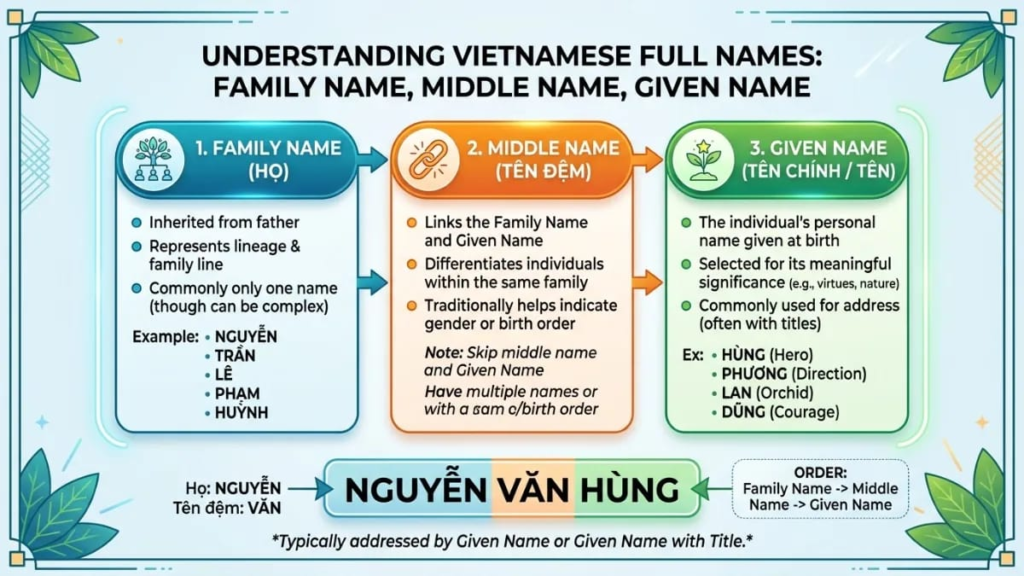
Traditional Vietnamese last names have three parts. The order is family name, middle name, then given name.
For example, in the name Nguyen Van Minh, Nguyen is the family name and Van is the middle name. Minh is the given name.
The middle name often shows gender or family branch. Van has traditionally been common for men, while Thi has been common for women.
Thi is used less often today, and many modern parents choose more creative middle names. Some families use middle names to mark siblings or generations.
People are usually called by their given name, not their surname. So Nguyen Van Minh would be addressed as Mr. Minh, not Mr. Nguyen.
This is one reason why so many people can share a surname without confusion. In daily life, the given name does the work of telling people apart.
Why Only a Few Surnames Dominate
Vietnamese last names have a few hundred surnames in use, but roughly a dozen of them cover about 90% of the population. Very few countries show this level of concentration.
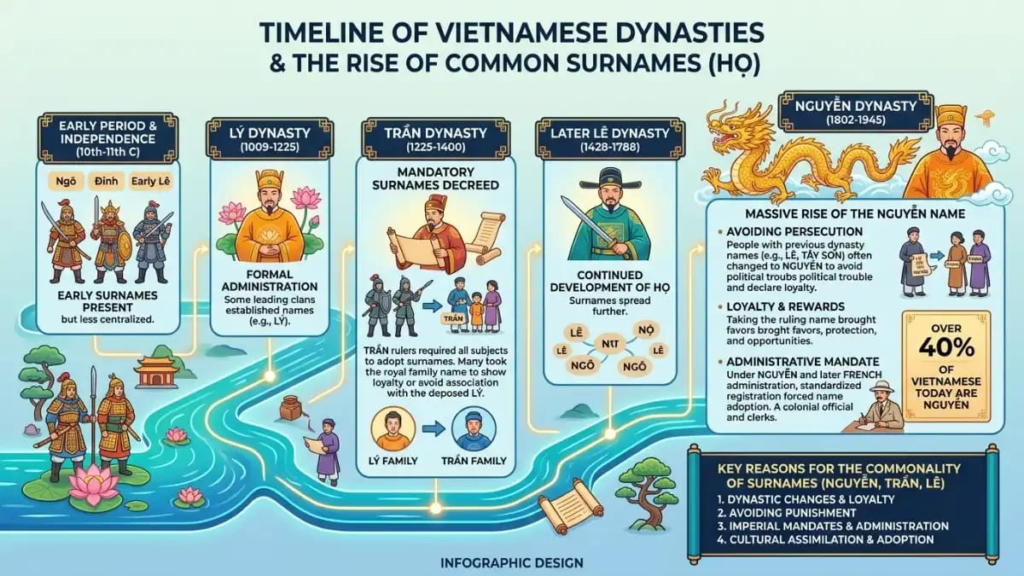
History explains most of it. When a dynasty fell, families connected to it sometimes changed their names to avoid punishment or persecution.
One well-known story links the Ly and Tran dynasties. After the Tran family took power in the 13th century, members of the Ly clan are said to have changed their name to Nguyen for safety.
Another cause is loyalty to a ruling house. Under later dynasties, people sometimes adopted the royal surname as a sign of respect or to gain favor.
Naming taboos also played a role. Names of kings and lords could not be spoken or written, so some families changed to a similar-sounding surname.
Over time, these changes stacked up. The result is a system where a few names grew huge while many rare ones almost disappeared.
Most Common Vietnamese Last Names
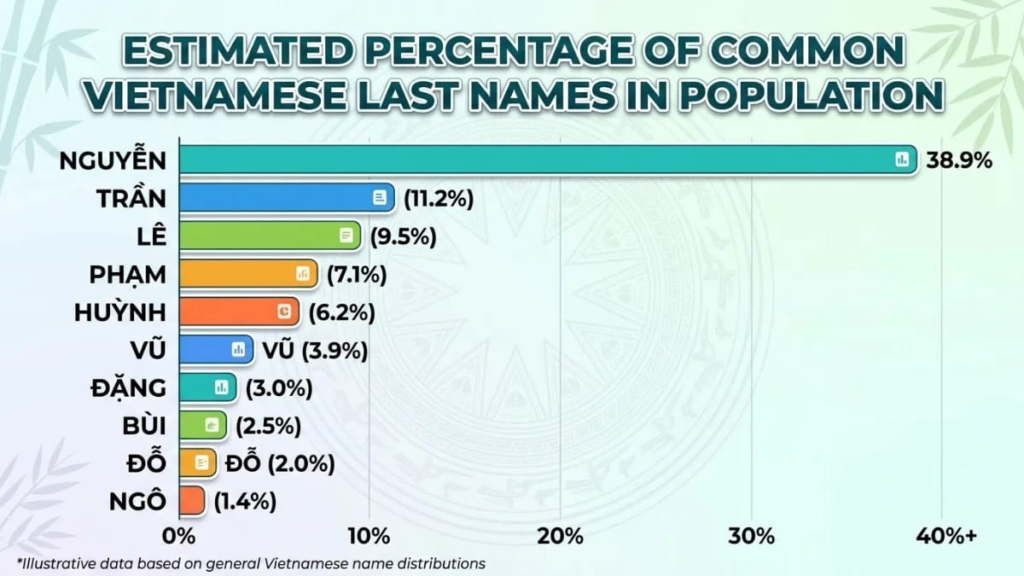
The table below lists the most common Vietnamese last names with their approximate share of the population. Estimates vary between sources, so treat the percentages as a guide.
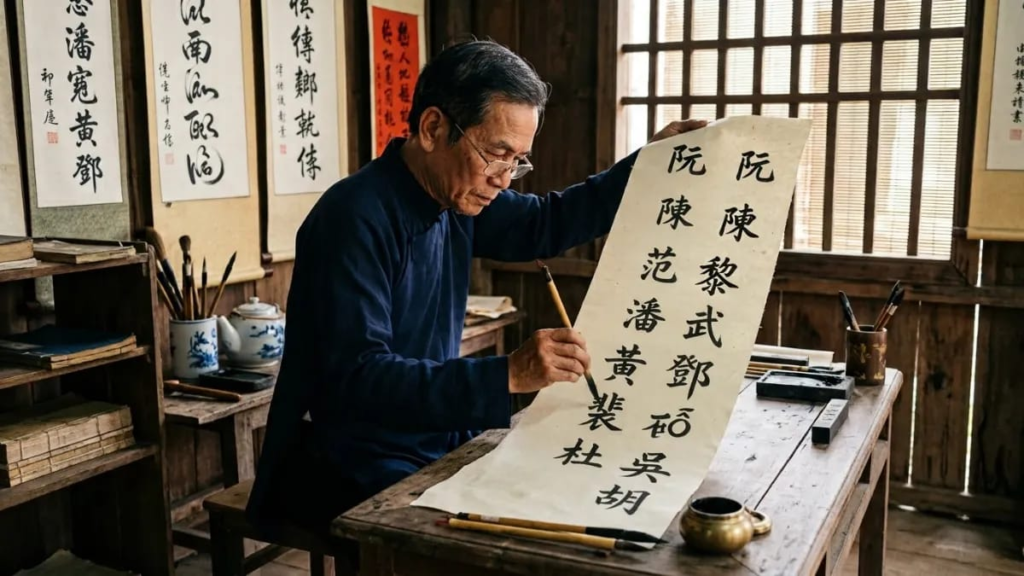
| Surname | Chinese Character | Approx. Share of Population |
| Nguyen | 阮 | about 38% |
| Tran | 陳 | about 11% |
| Le | 黎 | about 9.5% |
| Pham | 范 | about 7% |
| Hoang / Huynh | 黃 | about 5% |
| Phan | 潘 | about 4.5% |
| Vu / Vo | 武 | about 4% |
| Dang | 鄧 | about 2% |
| Bui | 裴 | about 2% |
| Do | 杜 | about 1.4% |
| Ho | 胡 | about 1.3% |
| Ngo | 吳 | about 1.3% |
| Duong | 楊 | about 1% |
| Ly | 李 | about 0.5% |
The Top Vietnamese Surnames Explained
Nguyen
Nguyen is by far the most popular of all Vietnamese last names, shared by roughly four in ten people. It comes from the Chinese surname Ruan, which is linked to a type of stringed instrument.
The Nguyen dynasty ruled Vietnamese last names from 1802 to 1945, which helped spread the name even further. Many people also took it during earlier political shifts.
Tran
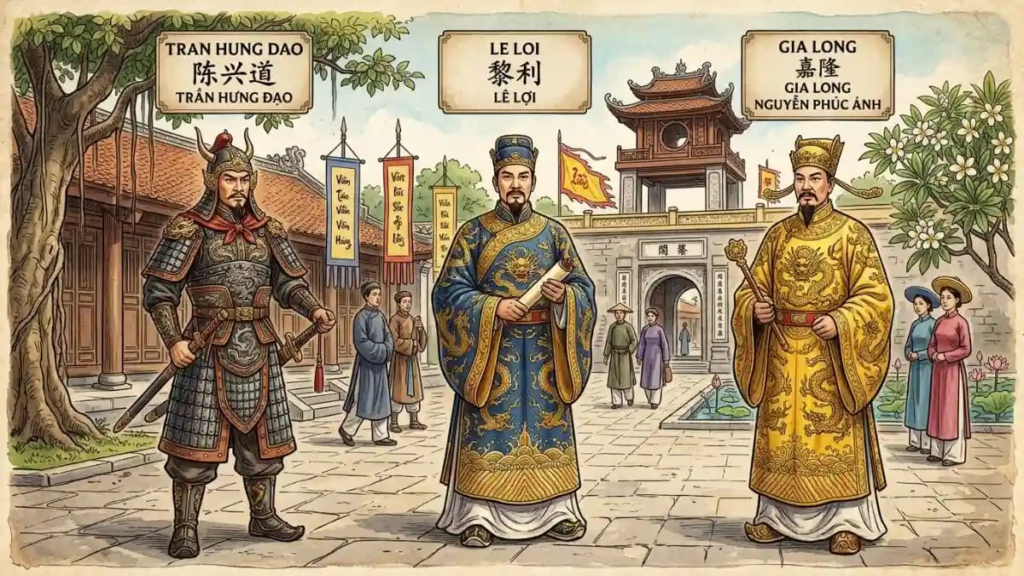
Tran comes from the Tran dynasty Vietnamese last names, which ruled from 1225 to 1400. The dynasty is famous for defending Vietnam against Mongol invasions.
Many families who hold this name proudly connect it to that heroic period. General Tran Hung Dao is one of its best-known figures.
Le
Le is tied to two great dynasties, the Early Le and the Later Le. The Later Le dynasty was founded by Le Loi after he drove out Ming forces in the 15th century.
Because of this, the name carries a strong feeling of national independence. It ranks third in popularity.
Pham
Pham is another very old surname with roots in Chinese. It is common in both northern and central Vietnam.
Historically, the Pham family produced many scholars and officials. The name is still widely respected today.
Hoang and Huynh
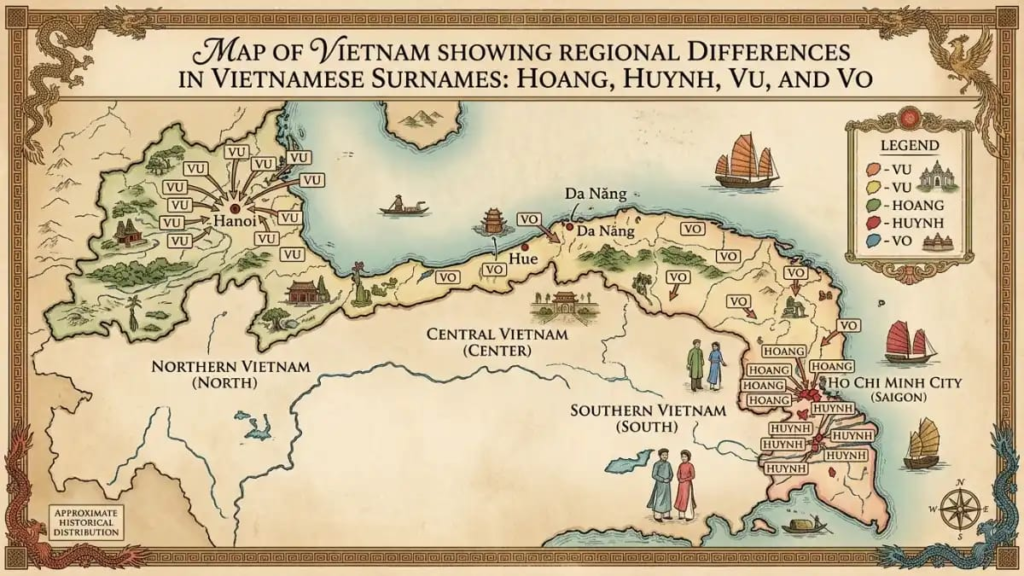
Hoang and Huynh are two spellings of the same original Chinese surname. Hoang is more common in the north, while Huynh is more common in the south.
The split is often explained by naming taboos under the Nguyen lords. Since the lord’s name included Hoang, some families in the south switched to Huynh.
Phan
Phan comes from the Chinese surname Pan. It is especially common in central Vietnam.
Many well-known scholars and patriots carried this name, including Phan Boi Chau, a leading figure in early 20th-century independence movements.
Vu and Vo
Vu and Vo also share one origin, the Chinese character meaning martial or military. Vu is used more in the north, and Vo more in the south.
General Vo Nguyen Giap is the most famous person with this name. His military leadership made the surname known around the world.
Dang, Bui and Do
Dang, Bui and Do each make up a smaller share, but they have deep roots in Vietnamese history. Many scholarly families carried these names in the old imperial exam system.
Together, they show that Vietnamese surnames are not only about the top few. Each one has its own regional story.
Ho, Ngo and Duong
Ho is linked to the short-lived Ho dynasty in the early 15th century. Ngo comes from the Chinese surname Wu and is tied to Ngo Quyen, who won a famous victory in 938.
Duong comes from the Chinese surname Yang. These names are less common but still widely recognized.
Ly
Ly is a smaller surname today, but it was once the name of a major dynasty. The Ly dynasty ruled from 1009 to 1225 and founded the capital that later became Hanoi.
Its small share today is partly explained by the name changes that followed the dynasty’s fall.
Regional Differences in Vietnamese Surnames
Some Vietnamese last names change spelling or pronunciation depending on the region. This is a normal part of how the language works.
The Hoang and Huynh pair is the clearest example of Vietnamese last names. The Vu and Vo pair follows the same pattern.
Dialects also change how names sound. The same written surname may be pronounced slightly differently in Hanoi, Hue and Ho Chi Minh City.
Central Vietnam has a stronger presence of some names, while the Mekong Delta has its own patterns. This gives surnames a hint of regional identity.
Migration has mixed these patterns over time. Today, a person with any surname can be found in any city.
Famous People With Vietnamese Last Names
Looking at well-known people helps show how these surnames appear in real life. Here are a few examples.
- Nguyen Du: A celebrated poet, best known for the epic The Tale of Kieu.
- Tran Hung Dao: A legendary general who defeated Mongol invasions.
- Le Loi: The founder of the Later Le dynasty.
- Vo Nguyen Giap: A military leader of the 20th century.
- Pham Van Dong: A long-serving prime minister of North Vietnam and later unified Vietnam.
- Ngo Quyen: The ruler who ended a long period of northern domination in 938.
Ho Chi Minh is often mentioned in this context, but Ho was an adopted name. He was born Nguyen Sinh Cung and used many names during his life.
Vietnamese Last Names Outside Vietnam
Vietnamese communities abroad have spread these surnames across the United States, Australia, France, Canada and Germany. Nguyen in particular now ranks among the most common surnames in several of these countries.
Many families kept their names unchanged, but others adapted them. Some dropped the tone marks, while others changed the spelling to make it easier to pronounce.
In Western countries, the order of names can cause confusion. Forms often expect a given name first, so people sometimes reverse their traditional order.
This can lead to mistakes in records. It is worth checking the order carefully on official documents.
How to Pronounce Common Vietnamese Last Names
Vietnamese is a tonal language, so exact pronunciation depends on tone marks. Still, a few simple guides can help.
- Nguyen: Often pronounced close to “win” or “nwin” in English.
- Tran: Sounds like “chan” in the north and “tran” in the south.
- Le: Similar to “leh.”
- Pham: Close to “fam.”
- Vu: Sounds like “voo.”
- Ngo: Similar to “ngaw,” with the “ng” sound at the start.
Tones change the meaning of a word entirely. If you are unsure, it is polite to ask the person how they say their own name.
Tips for Tracing Your Vietnamese Family Name
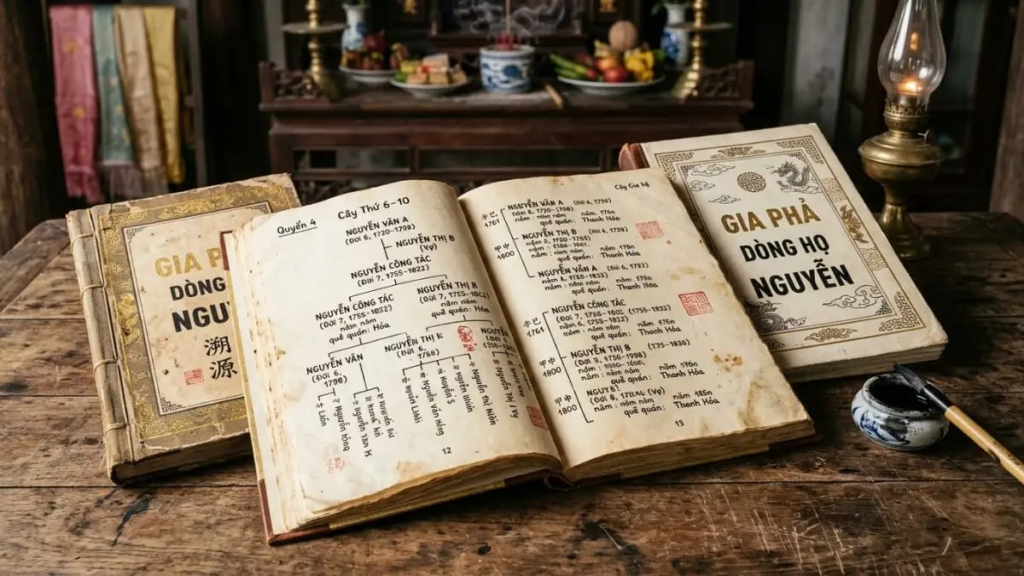
If you want to learn more about your own surname, start with family elders. Many Vietnamese families keep a record book that traces ancestors over many generations.
Some villages also keep a clan house, a place where family history and memorial tablets are stored. Visiting one can reveal details that are not written anywhere else.
You can also look at historical records and academic sources on Vietnamese naming. These help place your family name in its wider context.
Be careful with online claims about “the meaning” of a surname. Meanings often come from the original Chinese character, and different sources may disagree.
Conclusion
Vietnam
Vietnamese last names tell a story of dynasties, migration and family loyalty. A few surnames dominate, but each one carries its own history.
Understanding them helps you read Vietnamese names correctly and respect the culture behind them. It also makes it easier to see why the name Nguyen appears so often.
Whether you are researching your family, writing a story or simply curious, these surnames offer a clear window into Vietnamese history.
Frequently Asked Questions
What is the most common Vietnamese last name?
Nguyen is the most common, shared by roughly 38% of the population.
Why do so many Vietnamese people have the same last name?
Dynastic changes, royal naming customs and taboos pushed many families toward a few popular surnames.
Do Vietnamese women change their last name after marriage?
No. Women keep their own family name for life.
Which part of a Vietnamese name is the surname?
The surname comes first. For example, in Nguyen Van Minh, Nguyen is the family name.
Are Vietnamese last names from China?
Many are of Chinese origin, but they have been adapted to Vietnamese sound and spelling over centuries.
How do you pronounce Nguyen?
It is commonly said as “win” or “nwin,” though the exact sound depends on region and tone