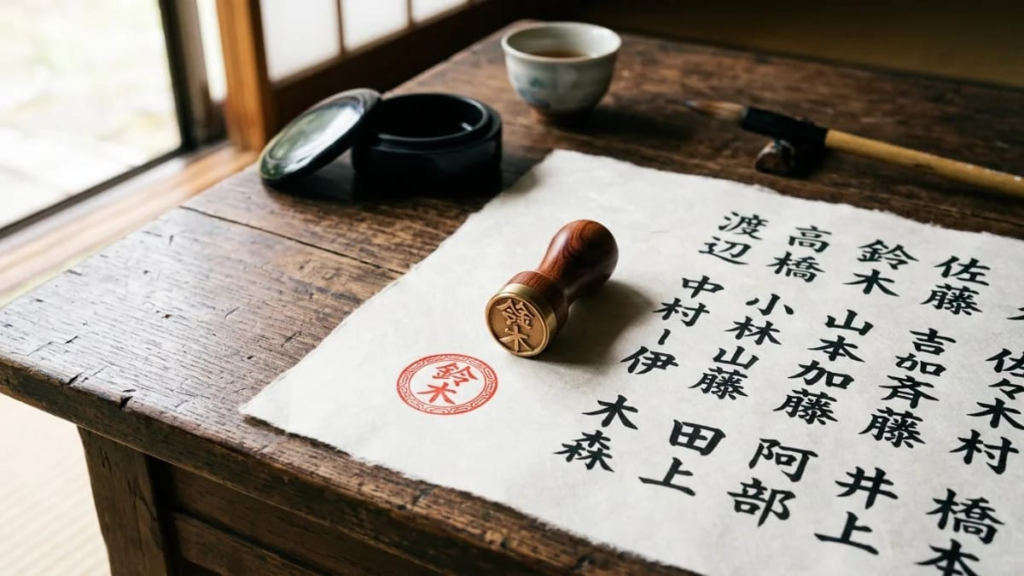

Common Japanese last names often sound simple, yet each one carries a picture of land, water or family history. Most are made of two kanji characters.
This guide lists 100 common Japanese last names, each with its kanji and meaning. You will find the top names, nature names, short names, clan names and rare finds.
Read through the lists and note the ones that stand out. Then use the checklist near the end to avoid common mistakes.
What Are Common Japanese Last Names?
Direct answer: Common Japanese last names are family names shared by large numbers of people, such as Sato, Suzuki and Takahashi. Most come from places, landscapes and old clan lines.
Japan has more than 100,000 surnames, but a small group covers a large share of the population.
Most surnames use two kanji characters, and many describe a field, river, mountain or village. In Japan the family name comes first, so Tanaka Hiroshi is Hiroshi Tanaka in Western order.
Surnames became widespread after 1875, when the government required every citizen to have one. That is why so many names describe ordinary places.
Use the sections below to browse by style. Every entry lists its kanji and meaning.
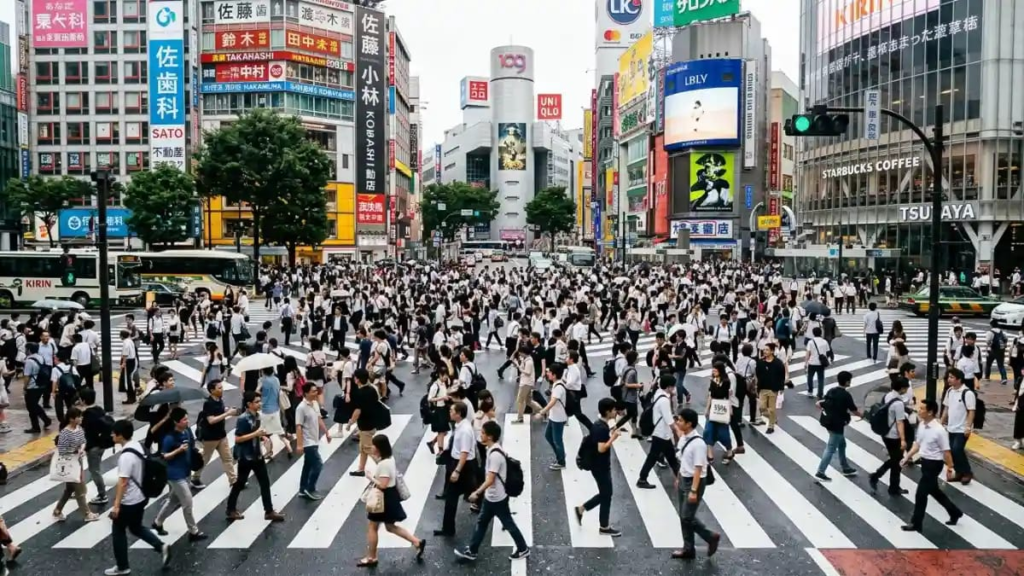
Most Common Japanese Last Names
Direct answer: The top surnames are short, familiar and found all over Japan. Sato, Suzuki and Takahashi are three clear examples.
Sato, Suzuki and Tanaka appear near the top of most surname surveys. Exact rankings vary a little from one survey to the next.
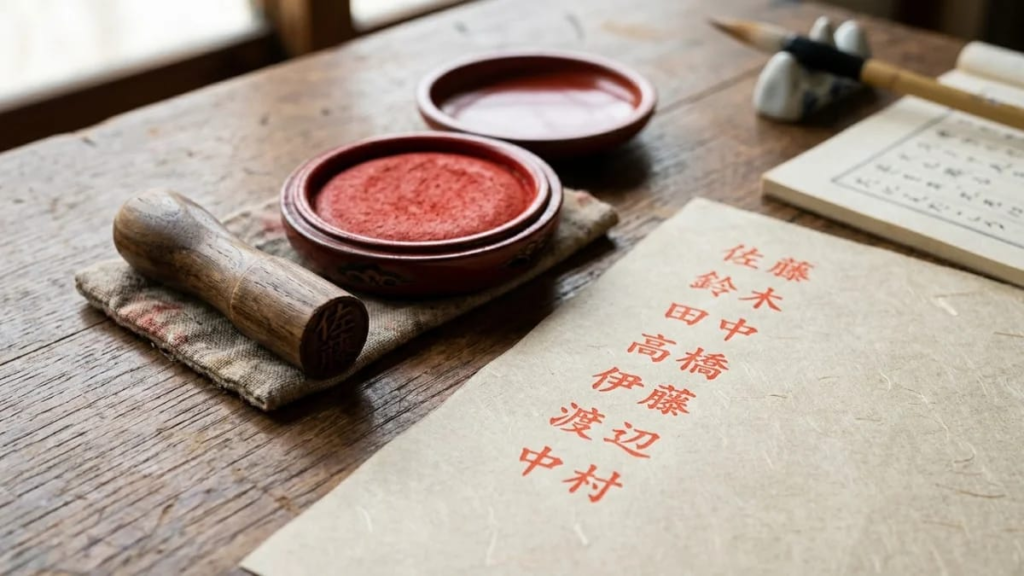
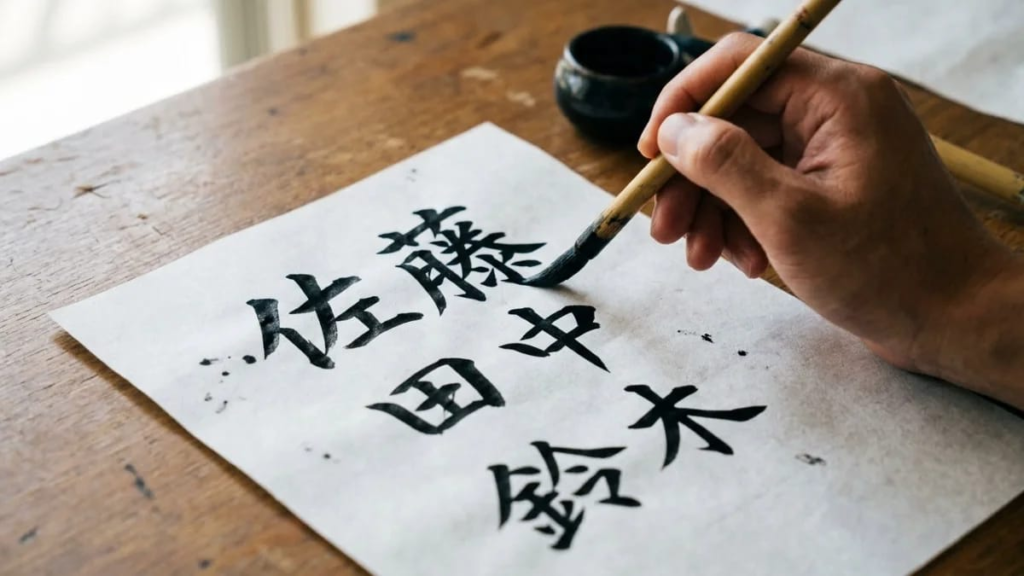
1. Sato (佐藤): wisteria, helper
2. Suzuki (鈴木): bell, tree
3. Takahashi (高橋): high bridge
4. Tanaka (田中): in the rice field
5. Watanabe (渡辺): near the crossing
6. Ito (伊藤): wisteria (Fujiwara line)
7. Yamamoto (山本): base of the mountain
8. Nakamura (中村): middle village
9. Kobayashi (小林): small forest
10. Kato (加藤): wisteria (Fujiwara line)
11. Yoshida (吉田): lucky rice field
12. Yamada (山田): mountain rice field
13. Sasaki (佐々木): from the Sasaki area of Omi
14. Yamaguchi (山口): mountain mouth
15. Matsumoto (松本): base of the pine
16. Inoue (井上): above the well
17. Kimura (木村): tree village
18. Hayashi (林): forest
19. Shimizu (清水): clear water
20. Yamazaki (山崎): mountain cape
Sato, Tanaka and Yamamoto are the easiest to say for new learners. They are short and clear.
Sasaki, Watanabe and Kobayashi are longer but well known. They are worth learning for anyone studying Japanese.
Popular Common Japanese Last Names
Direct answer: Popular surnames just below the top group are still shared by very large numbers of people. Mori, Ikeda and Ogawa are three clear examples.
21. Mori (森): forest
22. Abe (阿部): from the Abe clan
23. Ikeda (池田): pond field
24. Hashimoto (橋本): base of the bridge
25. Ishikawa (石川): stone river
26. Ogawa (小川): small river
27. Ishii (石井): stone well
28. Goto (後藤): Fujiwara branch line
29. Saito (斉藤): Fujiwara branch, shrine service
30. Okada (岡田): hill rice field
31. Hasegawa (長谷川): long valley river
32. Fujita (藤田): wisteria field
33. Maeda (前田): front field
34. Murakami (村上): above the village
35. Endo (遠藤): distant wisteria
36. Aoki (青木): green tree
37. Sakamoto (坂本): base of the slope
38. Kondo (近藤): near wisteria
39. Fujii (藤井): wisteria well
40. Nishimura (西村): west village
Several names, such as Sato, Ito, Kato, Endo and Kondo, contain the kanji for wisteria (藤). This often points back to the Fujiwara clan.
Ishikawa, Hasegawa and Hashimoto are longer but easy once you know the parts.
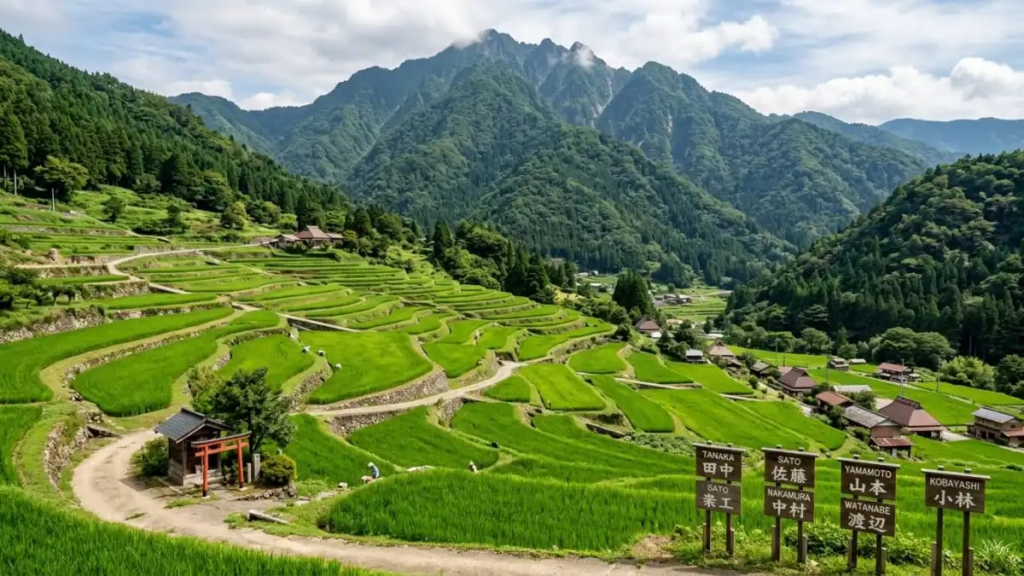
Nature-Inspired Common Japanese Last Names
Direct answer: Nature-based surnames describe rivers, mountains, bamboo and fields. They show how families were once named after the land where they lived.
41. Nakagawa (中川): middle river
42. Nakano (中野): middle field
43. Matsuda (松田): pine field
44. Harada (原田): plain field
45. Miura (三浦): three bays
46. Okamoto (岡本): base of the hill
47. Nakajima (中島): middle island
48. Ishida (石田): stone field
49. Ueda (上田): upper field
50. Morita (森田): forest field
51. Shibata (柴田): brushwood field
52. Takeuchi (竹内): inside the bamboo
53. Yokoyama (横山): side mountain
54. Kikuchi (菊池): chrysanthemum pond
55. Sugiyama (杉山): cedar mountain
Nakagawa, Kikuchi and Sugiyama paint a clear picture of the landscape. Miura and Nakajima point to coasts and islands.
These names suit writers and students who want a strong sense of place.
Short and Easy Common Japanese Last Names
Direct answer: Short surnames of one to three syllables are the easiest to spell and say. They also work well in stories, games and school projects.
| No. | Name | Kanji | Meaning |
| 56 | Hara | 原 | plain |
| 57 | Ono | 小野 | small field |
| 58 | Ota | 太田 | large field |
| 59 | Tani | 谷 | valley |
| 60 | Oka | 岡 | hill |
| 61 | Sugi | 杉 | cedar |
| 62 | Kubo | 久保 | hollow, low land |
| 63 | Kudo | 工藤 | craftsman, wisteria |
| 64 | Sano | 佐野 | helper field |
| 65 | Ando | 安藤 | peaceful wisteria |
| 66 | Wada | 和田 | harmony field |
| 67 | Noda | 野田 | wild field |
| 68 | Ueno | 上野 | upper field |
| 69 | Baba | 馬場 | horse ground |
| 70 | Kita | 北 | north |
Short common Japanese last names are simple in almost any language. That helps if you are learning Japanese or writing for a global audience.
Ono, Tani and Kita are the simplest to say. Kubo, Baba and Kudo are less familiar outside Japan.
Pair a short surname with a longer given name for balance, such as Ono Haruki or Tani Kotoha.
Historic Clan and Samurai Surnames
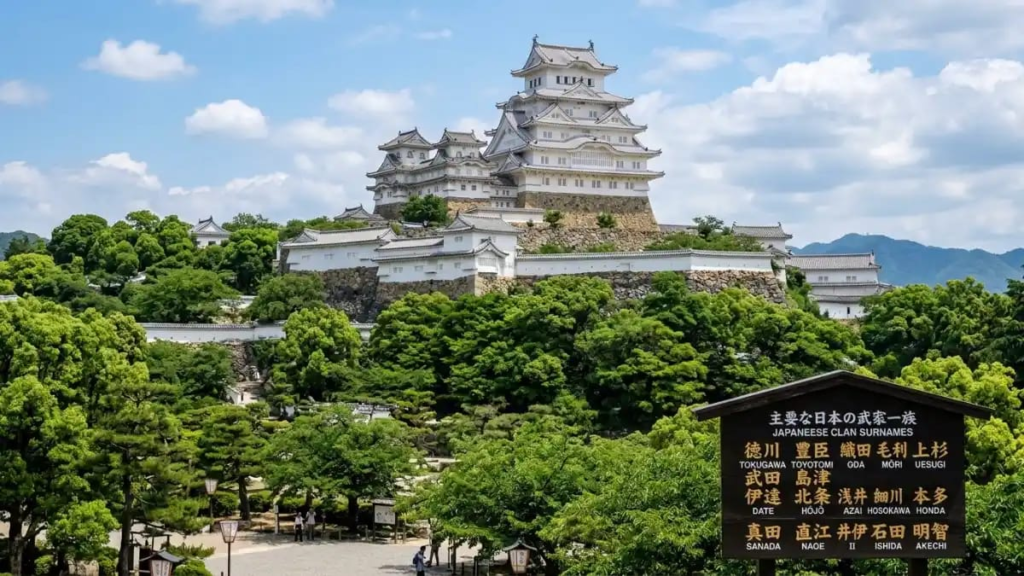
Direct answer: Clan surnames come from famous warrior families and rulers. They carry strong history, but most are less common today than everyday names.
71. Takeda (武田): warrior field
72. Oda (織田): weaving field
73. Date (伊達): dashing, stylish
74. Sanada (真田): true field
75. Kuroda (黒田): black field
76. Uesugi (上杉): upper cedar
77. Shimazu (島津): island port
78. Hojo (北条): north branch
79. Minamoto (源): source
80. Tokugawa (徳川): virtue river
Takeda, Oda and Date are easy to spot in history books, games and films. Minamoto and Tokugawa are tied to the most powerful ruling families.
Most clan names are far rarer today than the common Japanese last names in the first two lists.
Place and Landmark Surnames
Direct answer: These surnames point to villages, bridges, mounds and coasts. They show how place shaped family names, and many common Japanese last names follow the same pattern.
81. Murata (村田): village field
82. Masuda (増田): increase field
83. Sugawara (菅原): sedge plain
84. Otsuka (大塚): large mound
85. Chiba (千葉): thousand leaves
86. Matsui (松井): pine well
87. Iwasaki (岩崎): rock cape
88. Kinoshita (木下): beneath the tree
89. Noguchi (野口): field mouth
90. Nomura (野村): field village
Noguchi, Nomura and Kinoshita are widely used and easy to read. Sugawara and Otsuka are a little less familiar.
Rare and Unusual Japanese Last Names
Direct answer: Rare surnames are used by fewer families than common Japanese last names, but they still sound natural in Japanese. Many carry poetic images such as stars, mist or heaven.
91. Hoshino (星野): star field
92. Amano (天野): heaven field
93. Kurosawa (黒澤): black marsh
94. Kitagawa (北川): north river
95. Kagawa (香川): fragrant river
96. Tsukamoto (塚本): base of the mound
97. Shinohara (篠原): bamboo grass plain
98. Sakurai (桜井): cherry well
99. Kirishima (霧島): mist island
100. Mizuno (水野): water field
Hoshino, Amano and Mizuno are easy to say and easy to picture. Kirishima and Kurosawa need a short story, which many readers enjoy.
Common Kanji in Japanese Surnames
Learning a few kanji makes hundreds of common Japanese last names easy to read. This table shows the building blocks used in the lists above.
| Kanji | Reading | Meaning | Examples |
| 田 | ta, da | rice field | Tanaka, Yamada, Yoshida |
| 山 | yama | mountain | Yamamoto, Yamaguchi, Yamazaki |
| 川 | kawa, gawa | river | Ishikawa, Ogawa, Nakagawa |
| 木, 林, 森 | ki, hayashi, mori | tree, forest | Kimura, Hayashi, Mori |
| 井 | i | well | Inoue, Ishii, Fujii |
| 藤 | fuji, to | wisteria | Sato, Ito, Kato |
Once you know these parts, many names are easy to break down. Yamamoto, for example, is simply mountain plus base.
Surname and Given Name Pairings
A surname reads best when it matches the rhythm of the given name. Here are a few pairings built from the lists above.
| Surname | Given name | Feel |
| Sato | Haruto | Modern and friendly |
| Suzuki | Yui | Soft and bright |
| Tanaka | Ren | Short and strong |
| Takahashi | Sakura | Classic and elegant |
| Yamamoto | Sora | Calm and open |
| Kobayashi | Hinata | Warm and lively |
A short surname usually suits a longer given name, and the other way round. Say the full name aloud to check the rhythm.
Choosing from common Japanese last names is easier when you match the meaning to your story or character, since it adds depth and keeps the name believable.
Quick Picks by Goal
| If you want | Try | Why |
| The most common option | Sato, Suzuki | Top of most surveys |
| The easiest to say | Ono, Tani, Kita | Short and clear |
| A nature link | Yamamoto, Hayashi | Mountain and forest |
| A historic feel | Takeda, Date | Clan and samurai roots |
| A rare choice | Hoshino, Amano | Poetic and memorable |
How to Use Common Japanese Last Names Without Mistakes
A good name should still feel natural in real use. Run through this checklist before you decide.
- Put the family name first when you write in Japanese order.
- Check the kanji, since one sound can have several spellings, such as Saito (斉藤, 斎藤, 齋藤).
- Note long vowels, such as Ono and Ohno, which may be spelled differently in English.
- Match the surname to the setting, since clan names like Tokugawa feel unusual for an everyday character.
- Read the full name aloud with the given name.
- Ask a native speaker to review it for professional or published work.
Most writers narrow a long list to two or three favourites. Say each one aloud as you would introduce a new character.
It also helps to ask a Japanese speaker for honest feedback. Their first reaction often shows how the name will sound to others.
Do not feel pressed to pick a name only because it is popular. The best choice is the one that fits your purpose.
Final Thoughts
https://www.familysearch.org/en/wiki/Japanese_Names
The best common Japanese last names balance history, meaning and sound. A surname only needs to fit your purpose.
Start with the style that fits your project, then narrow the list. With 100 surnames to choose from, you have plenty of good options.
Save your favourites, say them aloud and check the kanji. The right name usually stands out after a few days.
Whether you pick a top name, a short one or a nature-inspired one, each of these common Japanese last names comes with a picture worth sharing.
FAQs
What are the most common Japanese last names?
Sato, Suzuki, Takahashi, Tanaka and Watanabe usually lead surname surveys.
Which surname is number one in Japan?
Sato is usually ranked first, though results differ slightly by survey.
Does the family name come first in Japan?
Yes. In Japan the family name is written first, then the given name.
What does Tanaka mean?
Tanaka (田中) means in the rice field.
How many common Japanese last names surnames are there?
Commonly cited estimates put the number at more than 100,000.
Why do so many surnames end in ta or da?
The kanji 田 means rice field, and many families took names from farmland.