

Do cats know their names? Yes — and it isn’t guesswork anymore. A 2019 study out of Tokyo found that cats reliably respond differently to their own name than to other words, even when a total stranger says it.
What the research doesn’t say is that cats will come when called. Knowing a name and acting on it turn out to be two very different things for a cat — the science settled that years ago, but everyday experience with a cat can still make it feel unresolved.
Do Cats Know Their Names? The Study That Settled It
This 2019 experiment is the main reason “do cats know their names” has a firm scientific answer instead of just owner opinion.
In 2019, psychologist Atsuko Saito and colleagues at the University of Tokyo published a study in Scientific Reports testing 78 cats from ordinary homes and from Japanese cat cafés.
Owners and strangers said four unfamiliar words to each cat until the cat stopped reacting to them — a method called habituation. Then they said the cat’s actual name.
Across the board, cats reacted more strongly to their own name: more ear movement, head turns, and tail flicks than they showed for the earlier words. The effect held even when a stranger, not the owner, said the name.
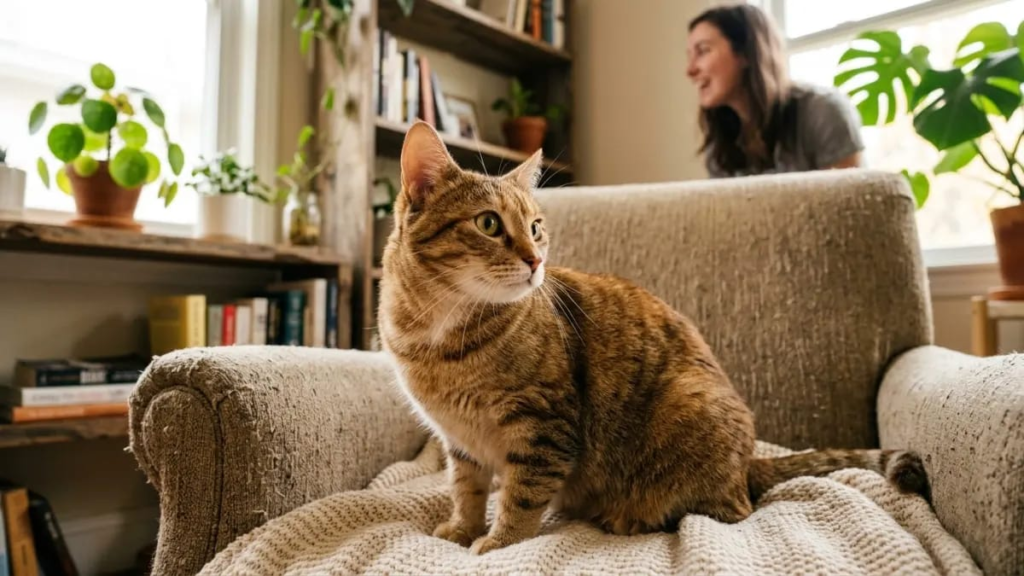
How Cats Actually Show Recognition
Don’t expect a dog-like reaction. A cat’s response to its name is usually small and easy to miss if you’re not watching for it.
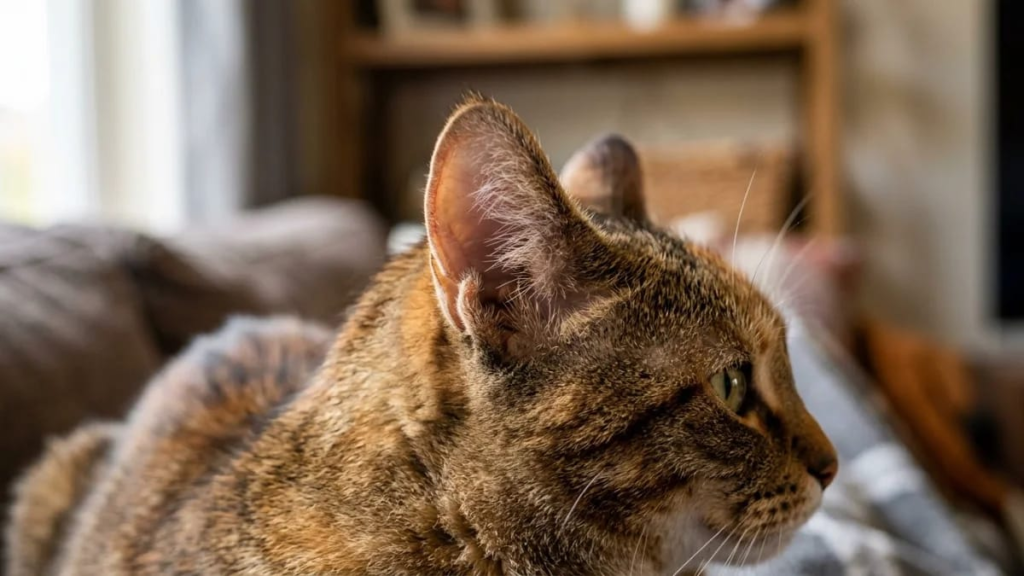
- A single ear rotating toward the sound
- A slow head turn without moving the body
- A tail flick or twitch
- Pupils widening slightly
- A brief pause in whatever they were doing
These small, physical cues are exactly what researchers point to when answering “do cats know their names” in practical, observable terms.
Do Cats Know Their Names — and Other Cats’ Names Too?
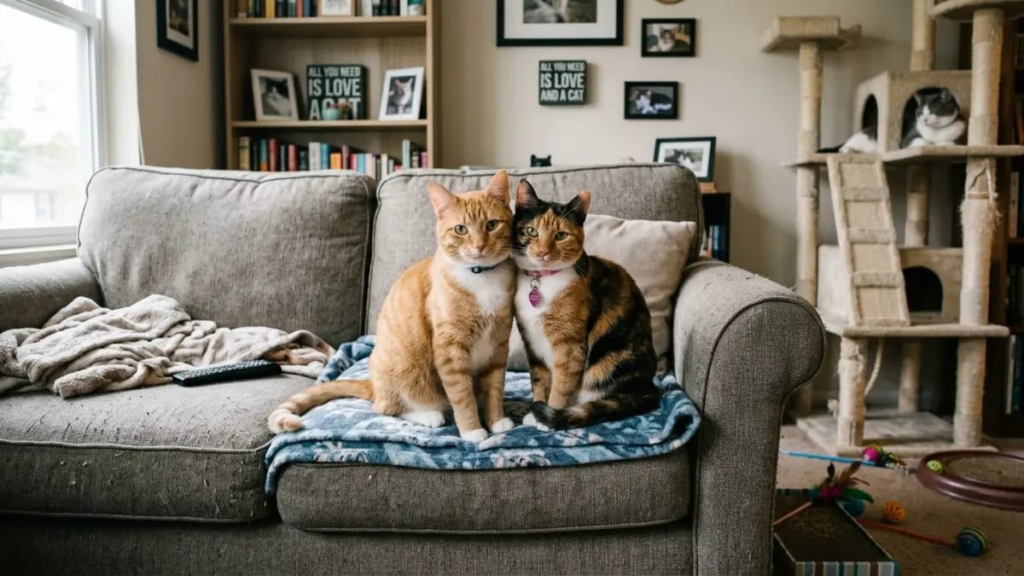
A follow-up 2022 study, published in Scientific Reports, found that household cats connect names to faces — not just their own.
Researchers showed cats a photo of a cat they lived with while a speaker said either the correct name or a mismatched one. When the name didn’t match the face on screen, cats stared at it noticeably longer, a reaction researchers call an “expectancy violation.”
Interestingly, this only showed up in cats from ordinary multi-cat households, not cat café cats living alongside dozens of others. Fewer, more familiar relationships seem to make the names easier to learn. It’s further proof that “do cats know their names” goes beyond a simple sound reflex — cats are tracking real relationships.
Worth noting: the same research group found cats showed a weaker version of this effect with human family members’ names — suggesting they pick up on human names too, just less reliably than cat names.
So Why Does My Cat Ignore Me?
So while “do cats know their names” is settled science, the real mystery is why cats still act like they don’t hear you. Recognizing a sound and acting on it aren’t the same skill, and cats were never bred to bridge that gap the way dogs were.

Dogs have spent thousands of years being selectively bred for responsiveness to human cues. Cats largely domesticated themselves and were selected for hunting ability, not obedience.

Saito, the lead researcher on the 2019 study, has suggested cats likely associate their name with an outcome — food, attention, or being picked up — rather than treating it as a command. If the outcome doesn’t interest them in that moment, they simply don’t act on it.
How to Get Your Cat to Actually Respond
Since “do cats know their names” already has a yes, the real project is turning that recognition into a reliable response.
[IMAGE-07-training.jpg] — A person doing a short, calm name-training session with a cat at home
Alt text: “Person doing a short name-training session with a cat at home”
1. Say the name right before something good happens — a meal, a treat, playtime — so the sound gets linked to a reward.
2. Keep the tone consistent. A short, upbeat tone works better than a flat or annoyed one.
3. Never use their name right before something unpleasant, like a nail trim or a carrier. That teaches them the name predicts something to avoid.
4. Reward any response — even an ear flick — in the early stages, not just full attention.
5. Keep sessions short. A few seconds, a few times a day, works better than one long session.
![[IMAGE-08-treat.jpg] — A person holding out a treat to a cat that is looking up at them](https://namesworlds.com/wp-content/uploads/2026/09/image-204-1024x576.png)
When Non-Response Is Worth a Vet Visit
At this point, “do cats know their names” is fully settled, so a real behavior change is worth paying attention to.
A cat that’s always ignored their name isn’t cause for concern — that’s just typical feline behavior.
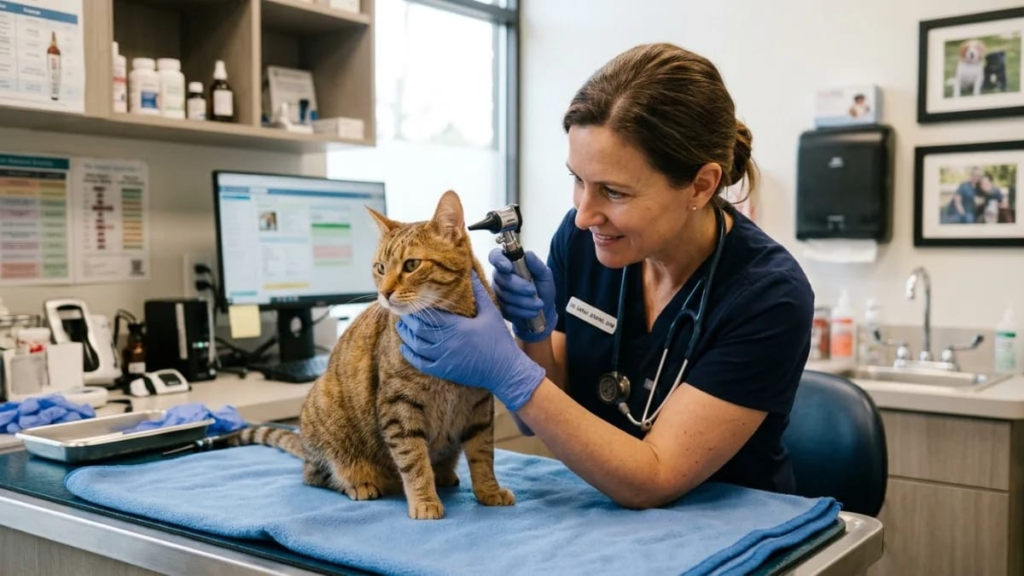
A cat that suddenly stops responding after reliably reacting for years is different. That kind of change can point to hearing loss, an ear infection, or, in older cats, cognitive decline, and it’s worth mentioning to a vet rather than writing off as attitude.
The Short Version
Do cats know their names? Yes, reliably, and the 2019 and 2022 studies both back that up with real data rather than owner anecdotes.
What they do with that knowledge is a separate question entirely — one that seems to depend on mood, motivation, and whatever’s more interesting at the moment than you are.
Your cat almost certainly knows its name. Whether it’s worth their while to admit that is, as always, entirely up to them.
Final Thought
Cats may not understand their names exactly like humans do, but research suggests they can recognize familiar names.
Calling your cat by name regularly can help build familiarity and a stronger bond.
Every cat has its own personality, so some may respond more clearly than others.
With patience and positive interaction, your cat can learn to associate its name with you.
So, choose a name you love and enjoy creating special moments with your feline friend!
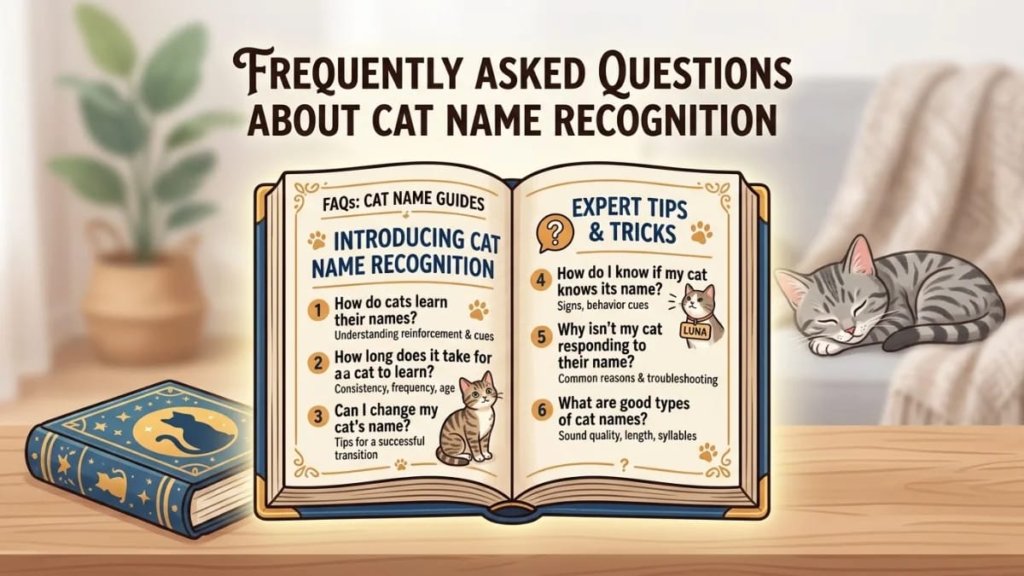
FAQs
Do cats know their names?
Yes. A 2019 University of Tokyo study confirmed cats discriminate their name from other words, even said by a stranger.
Why does my cat ignore me when I call?
Recognition and motivation are separate. Cats often know their name but don’t see a reason to act on it.
Can cats learn more than one name?
Yes — studies show cats can also learn the names of other cats, and sometimes household members, they live with.
How long does it take to teach a cat its name?
Most cats start responding within one to two weeks of short, consistent, reward-based practice.
Should I worry if my cat stops responding to its name?
Only if it’s a sudden change from previous behavior — that’s worth a vet check, not just assumed attitude.
Is “do cats know their names” backed by real science or just owner opinion?
Real science — two peer-reviewed studies confirm it, not just anecdotal reports from owners.