
Spanish names are loved around the world for their warm sound, rich history and strong family traditions. Whether you are naming a baby, creating a character or simply curious about the culture, this guide keeps the choice simple.
Below you will find 50 Spanish names for boys and girls, sorted by style, with meanings, origins, pronunciation help and common nicknames. You will also learn how Spanish naming customs work, including double first names and two surnames, and how to avoid the mistakes that trip up first-time users.
Read to the end and you will have a clear shortlist, plus a checklist to test your favourites before you commit.
What Are Spanish Names?
Spanish names are the given names and surnames used in Spain and across Spanish-speaking countries, including Mexico, Colombia, Argentina and Peru. Most come from Latin, Greek, Hebrew, Germanic or Arabic roots, and many honour saints or religious figures. Regional languages such as Basque, Catalan and Galician add their own distinct choices.
Why People Search for Spanish Names
People look up names for many reasons, and each reason shapes which options suit them best.
- Heritage: families want to honour roots in Spain or Latin America with a name that feels authentic.
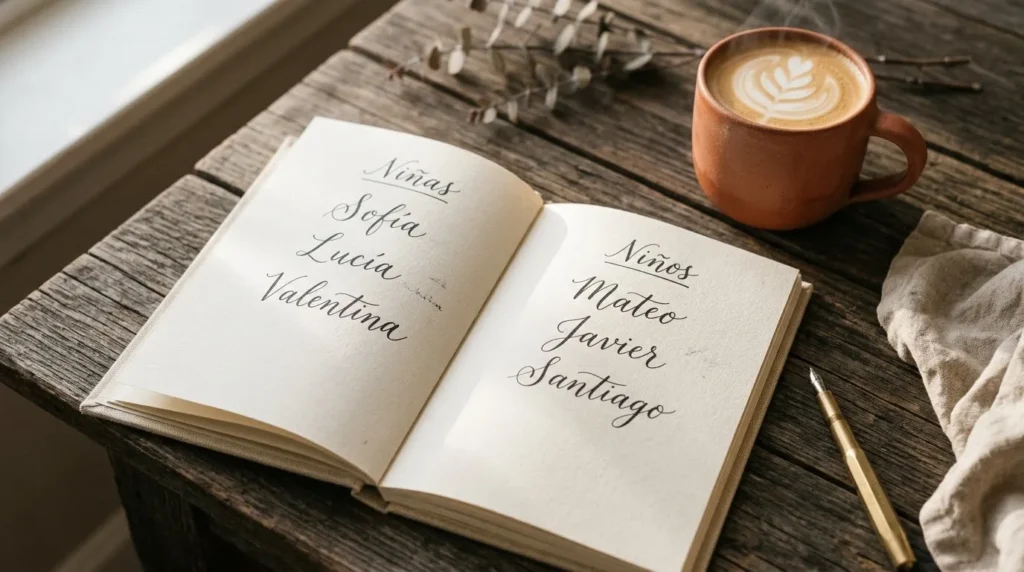
- Sound: the vowel-rich rhythm of names like Lucía, Mateo and Valentina is easy to say in many languages.
- Meaning: many names carry clear meanings such as light, hope, dove or protection that parents can share later.
- Storytelling: writers and game designers want believable names for characters set in Spanish-speaking worlds.
This guide covers all four needs. Every entry shows the meaning, the origin and a pronunciation hint, so you can judge real-life fit and not only the sound.
What Makes Spanish Names Different?
Several features set these names apart from English-language names. Knowing them helps you spot an authentic choice and use it correctly.
- Vowel endings: most girls’ names end in -a and most boys’ names in -o, as in Elena and Mateo, though there are many exceptions such as Carmen and Javier.
- Accent marks: written accents show stress and are part of the spelling, so María and Maria are not the same on paper.
- Double names: combinations such as José Luis or María José are common and are often treated as one single name.
- Two surnames: people usually carry the father’s first surname followed by the mother’s first surname.
- Saint connections: many names follow the Catholic calendar, and some families also celebrate a saint’s day in addition to the birthday.
The best choice balances sound, meaning and ease of use. A name that is beautiful but constantly misspelled becomes a daily chore, while one that is simple but meaningless may feel flat.
How Spanish Naming Customs Work
In Spain and most of Latin America, a full name has three or four parts: one or two given names and two surnames. For example, Ana María García López has the given names Ana María, the father’s surname García and the mother’s surname López.
In Spain, women keep their own surnames after marriage, while customs in Latin America vary by country. Parents in Spain can also agree on the order of the two surnames for their child. Understanding these rules matters when you pick from Spanish names, because the first given name will always sit beside two surnames.
Classic Spanish Names for Boys
Classic boys’ names have stayed popular for centuries. These ten are easy to pronounce and carry strong meanings.
- Alejandro: Greek origin, meaning defender of men. Say ah-leh-HAHN-droh. Álex and Alejo are common nicknames.
- Santiago: the Spanish form of Saint James, patron saint of Spain. Say sahn-tee-AH-goh. Santi and Tiago are popular short forms.
- Mateo: the Spanish form of Matthew, from Hebrew, meaning gift of God. Say mah-TEH-oh. Teo is a friendly nickname.
- Sebastián: Greek origin, usually explained as venerable or revered. Say seh-bahs-tee-AHN. Sebas is the usual short form.
- Javier: from the Basque place name Etxeberri, meaning new house, and made famous by Saint Francis Xavier. Say hah-vee-EHR. Javi is the everyday nickname.
- Rafael: Hebrew origin, meaning God has healed. Say rah-fah-EHL. Rafa is a warm nickname.
- Gabriel: Hebrew origin, meaning God is my strength. Say gah-bree-EHL. Gabi and Gabo are common short forms.
- Joaquín: Hebrew origin, usually explained as God will establish. Say hwah-KEEN. Quino and Joaco are known nicknames.
- Rodrigo: Germanic origin, meaning famous power. Say roh-DREE-goh. Rodri is a common short form.
- Nicolás: Greek origin, meaning victory of the people. Say nee-koh-LAHS. Nico is the natural nickname.
Classic Spanish Names for Girls
These ten girls’ names are timeless, melodic and well known across the Spanish-speaking world.
- Sofía: Greek origin, meaning wisdom. Say soh-FEE-ah. Sofi is a common nickname.
- Valentina: Latin origin, meaning strong and healthy. Say bah-len-TEE-nah. Vale and Tina are easy short forms.
- Lucía: Latin origin, from lux, meaning light. Say loo-SEE-ah. Luci is a sweet nickname.
- Isabel: the Spanish form of Elizabeth, from Hebrew, usually explained as God is my oath. Say ee-sah-BEHL. Isa and Chabela are traditional short forms.
- Camila: Latin origin, linked to a young attendant in religious ceremonies. Say kah-MEE-lah. Cami is the common nickname.
- Elena: Greek origin, often linked to light or a torch, though the exact meaning is debated. Say eh-LEH-nah. Lena is a short form.
- Inés: Greek origin, meaning pure. Say ee-NEHS. It is short, elegant and rarely mispronounced.
- Beatriz: Latin origin, meaning she who brings happiness. Say beh-ah-TREES. Bea is the usual nickname.
- Catalina: Greek origin, usually explained as pure. Say kah-tah-LEE-nah. Cata and Cati are common short forms.
- Carmen: from Mount Carmel, and also linked to the Latin word for song. Say KAR-men. It is a classic name with a strong, musical feel.
Religious and Saint-Inspired Spanish Names
Faith has shaped naming in Spain for centuries, and many names refer to saints, holy places or the Virgin Mary. These ten are widely used today.
- Dolores: meaning sorrows, from the title Our Lady of Sorrows. Say doh-LOH-res. Lola is the classic nickname.
- Pilar: meaning pillar, from Our Lady of the Pillar in Zaragoza. Say pee-LAR. It is short and strong.
- Mercedes: meaning mercies, from Our Lady of Mercy. Say mehr-SEH-dehs. Merche is a popular short form.
- Consuelo: meaning consolation. Say kon-SWEH-loh. Chelo is a rare short form.
- Rosario: meaning rosary. Say roh-SAH-ryoh. Charo is the traditional nickname.
- Guadalupe: with Arabic and Latin roots, often explained as river of the wolf, and linked to the Virgin of Guadalupe. Say gwah-dah-LOO-peh. Lupe is the classic nickname.
- Salvador: Latin origin, meaning savior. Say sahl-bah-DOR. Chava is a common short form in Mexico.
- Ignacio: Latin origin, from Ignatius, possibly linked to fire, though the origin is debated. Say eeg-NAH-syoh. Nacho is the nickname.
- Cristóbal: Greek origin, meaning bearer of Christ. Say krees-TOH-bahl. Cris is an easy short form.
- Esperanza: meaning hope. Say ehs-peh-RAHN-sah. Espe is a friendly short form.
Nature and Poetic Spanish Names
Some of the most charming choices come straight from the natural world. They suit anyone who wants something meaningful and soft.
- Paloma: meaning dove. Say pah-LOH-mah. It is a gentle symbol of peace.
- Rocío: meaning dew. Say roh-SEE-oh. Ro is a handy short form.
- Alba: meaning dawn or white. Say AHL-bah. It is short, modern and simple to spell.
- Estrella: meaning star. Say ehs-TREH-yah. Estrellita is the affectionate form.
- Azucena: meaning lily, from an Arabic root. Say ah-soo-SEH-nah. It is rare and floral.
- Marina: Latin origin, meaning of the sea. Say mah-REE-nah. Mari is a soft nickname.
- Violeta: meaning violet. Say byoh-LEH-tah. It feels vintage and fresh at once.
- Luz: meaning light. Say LOOS, or LOOTH in much of Spain. It is a one-syllable choice that is hard to misspell.
- Leo: Latin origin, meaning lion. Say LEH-oh. It is short, strong and works in many languages.
- Marisol: a blend of María and sol, often read as sea and sun, though it traditionally comes from María de la Soledad. Say mah-ree-SOL. Mari and Sol are natural nicknames.
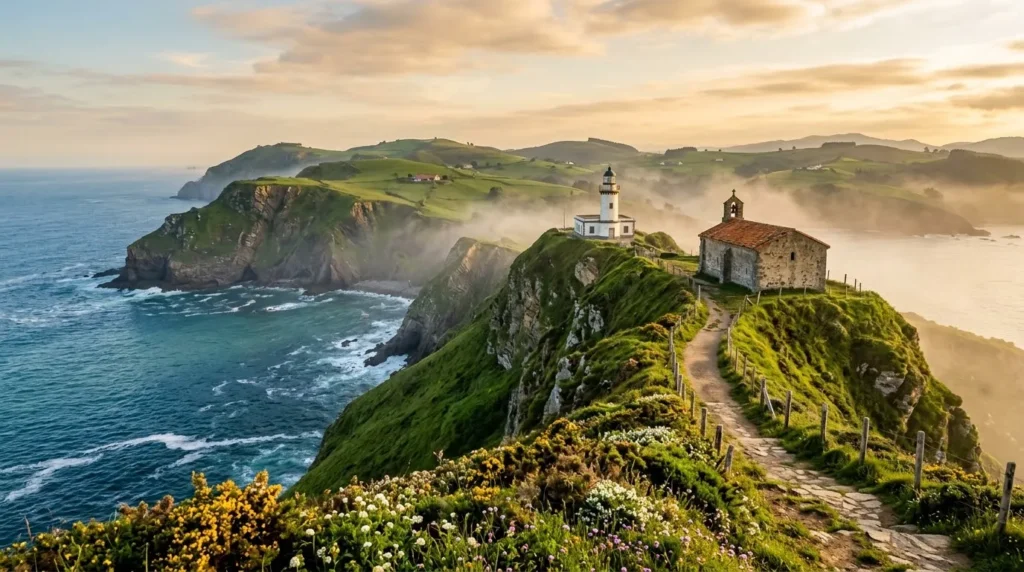
Regional Spanish Names: Basque, Catalan and Galician
Spain has several official regional languages, and each has its own naming traditions. These regional picks are among the most distinctive Spanish names you can choose.
- Itziar: Basque, from the Marian shrine of Itziar. Say eet-SYAR. It is rare outside Spain.
- Aitor: Basque, linked to a legendary patriarch, with the meaning debated. Say eye-TOR. It is short and strong.
- Iker: Basque, often explained as messenger or visitation. Say ee-KEHR. It is easy to spell and say.
- Montserrat: Catalan, from the serrated mountain and monastery near Barcelona. Say mohn-seh-RAHT. Montse is the everyday short form.
- Jordi: the Catalan form of George, from Greek, meaning farmer. Say ZHOR-dee in Catalan. It is friendly and widely known in Spain.
- Núria: Catalan, from a mountain sanctuary, with the meaning debated. Say NOO-ryah. It is short and graceful.
- Xavier: the Catalan and Galician spelling of Javier. It starts with a sh sound in both languages.
- Uxía: the Galician form of Eugenia, from Greek, meaning well-born. Say oo-SHEE-ah. It is very rare outside Galicia.
- Arantxa: the Basque short form of Arantzazu, a Marian shrine. Say ah-RAHN-chah. It is lively and distinctive.
- Ainhoa: Basque, from a Marian shrine of the same name. Say eye-NOH-ah. It is soft and easy to remember.
Spanish Names in Spain vs Latin America
The two regions share most of their names, but each has its own favourites and habits. Latin America also has more nicknames and a few names with indigenous roots, while Spain adds Basque, Catalan and Galician choices that are rare elsewhere.
Pronunciation changes too. In much of Spain, the letters z and soft c sound like th, so Lucía and Mercedes carry that sound. In Latin America, they sound like s. Neither version is wrong, so choose the one that fits your family. If your family comes from a specific country, check which names are common there, since local favourites can change the feel of a name.
Common Problems With Spanish Names and Easy Solutions
These names are easy to love, but they can cause small problems outside Spanish-speaking countries. Test your favourites against these issues early.
- Problem: accent marks disappear on forms and websites. Solution: ask for the accented spelling to be recorded where possible, and keep a plain-letter version for systems that cannot handle it, such as the machine-readable zone of a passport.
- Problem: the letters j, ll and ñ confuse speakers of other languages. Solution: write a simple phonetic guide for teachers and colleagues, such as hah-vee-EHR for Javier.
- Problem: double names are split or shortened. Solution: decide early whether José Luis is one name or two, and use it the same way on every form.
- Problem: two surnames confuse databases. Solution: pick one surname format and use it consistently on every document.
- Problem: the name sounds different in English. Solution: say it aloud with your surname and check how it sounds in the main language of daily life.
- Problem: sources disagree on the meaning. Solution: compare at least two trusted name dictionaries, and ask a native speaker about Basque, Catalan or Galician names.
- Problem: surprising nicknames. Solution: learn the traditional short forms first, since some, like Paco for Francisco, are not obvious to outsiders.
Nicknames and Second Name Ideas for Spanish Names
Nicknames are part of everyday life in Spanish culture, and many are not obvious from the full name. Use this table as a starting point for your own shortlist.
| Full name | Traditional nickname | Second name idea |
| Francisco | Paco | Javier |
| José | Pepe | Luis |
| Dolores | Lola | Beatriz |
| Ignacio | Nacho | Mateo |
| Guadalupe | Lupe | Isabel |
| Concepción | Concha | Sofía |
| Manuel | Manolo | Andrés |
| Rosario | Charo | Elena |
| Enrique | Quique | Alejandro |
| Mercedes | Merche | Lucía |
How to Choose Between Spanish Names in 7 Steps
When you have a shortlist, these checks help you decide with confidence. Do them in order and your favourite will usually be clear.
- Say the full name aloud: try the given name and both surnames together. Flow matters more than you expect.
- Write it down: check the accent marks and spelling on paper and on a screen.
- Test the nicknames: make sure you like every short form people might use.
- Check the initials: avoid letters that spell something awkward.
- Search the name online: see what comes up, including brands, places and public figures.
- Verify the meaning: confirm it in two reliable sources, especially for regional names.
- Wait a week: if you still love the name after seven days, it is likely the right one.

Mistakes to Avoid When Picking Spanish Names
Even careful people slip up when choosing Spanish names. These are the mistakes that come up most often.
- Dropping the accent: a missing mark changes the look, and sometimes the stress, of a name.
- Guessing gender from the ending: Carmen and Pilar are girls’ names without an -a ending, and Andrea is a girl’s name in Spain but a boy’s name in Italy.
- Ignoring the meaning: check what the name means in its original language and whether it carries a religious reference that matters to you.
- Skipping a sibling check: a new name should sit comfortably next to your other children’s names.
- Following one list: compare several sources, because choices vary by country and by year.
Final Thoughts
Spanish names and their origins
The right name is the one you can say with a smile every day. Spanish names offer a lovely mix of history, sound and meaning, whether you choose a classic like Sofía or Mateo or a regional gem like Itziar or Jordi.
Start with the style that suits you best, then use the checks above to test your favourites. Before you finalise any name, confirm the meaning, accents and spelling in a trusted source.
If you are still undecided, pick three names from this list and say them aloud for a week. The one you keep reaching for is usually the right one.
FAQs
What are the most beautiful Spanish names?
Beauty is personal, but Sofía, Lucía, Mateo, Santiago and Valentina are loved for their sound and meaning. They are also easy to pronounce in many languages.
What are the most popular Spanish names today?
Popularity changes by country and year. Names such as Lucía, Sofía, Mateo and Hugo have often ranked highly in recent years, so check your country’s official statistics for current figures.
How do Spanish last names work?
Most people carry two surnames: the father’s first surname followed by the mother’s first surname. Parents in Spain can agree on a different order for their children.
Do Spanish names need accent marks?
Yes, accent marks are part of correct spelling and show which syllable is stressed. If a form cannot accept them, use the plain letter and keep the accented version wherever you can.
Can I use a Spanish name if I am not Spanish?
Yes, if you understand the meaning and pronunciation and use the name respectfully. If possible, check with a native speaker of the language.
Are Spanish names and Latin American names the same?
They overlap heavily, but each country has its own favourites. Spain also has Basque, Catalan and Galician names that are rare elsewhere.